
Last updated November 23, 2026
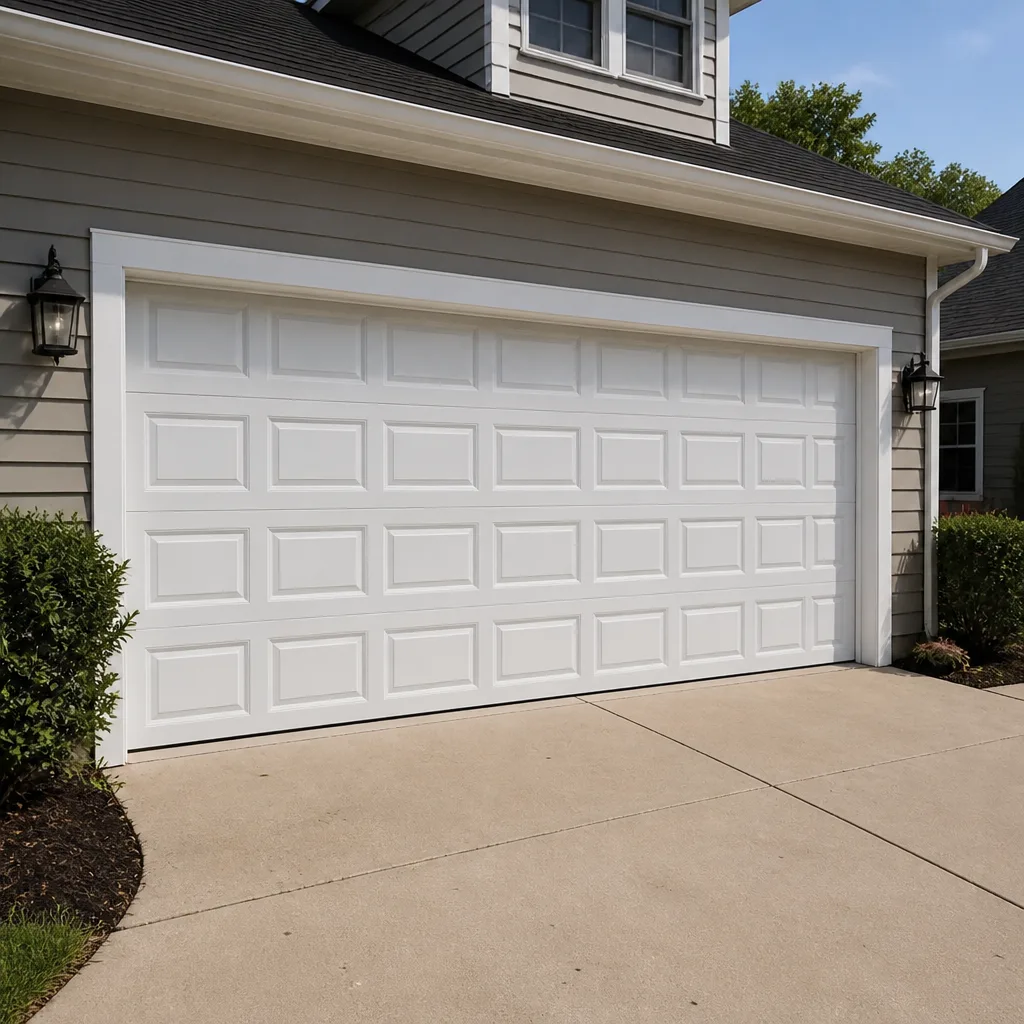 Raised-panel steel
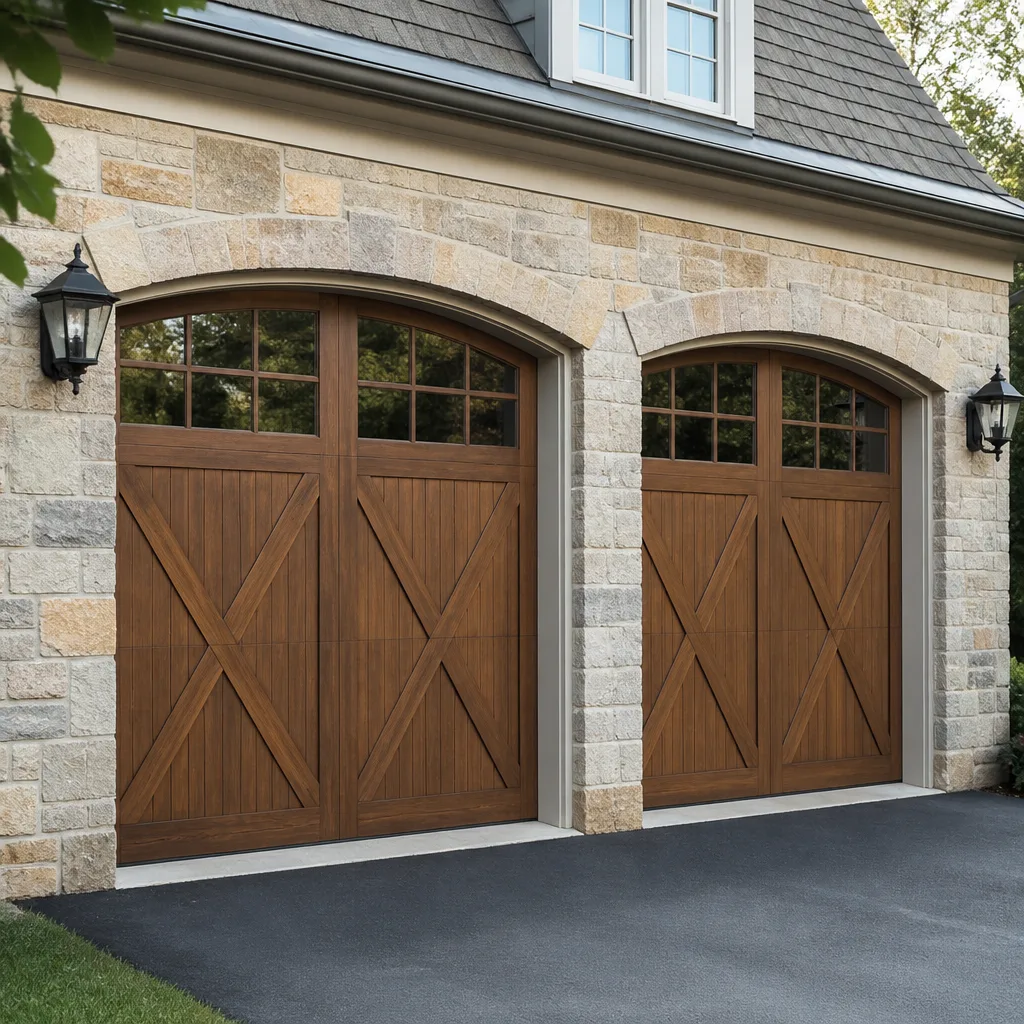 Carriage house
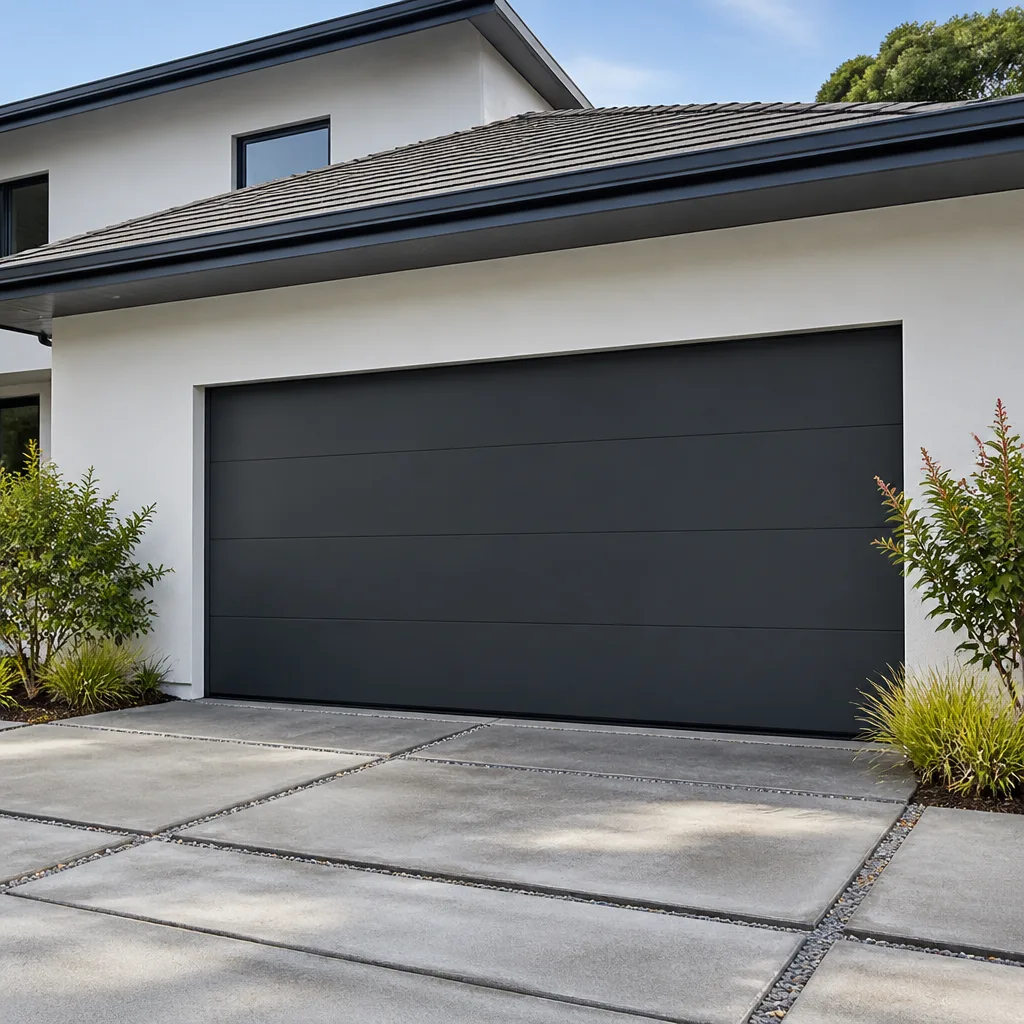 Modern flush
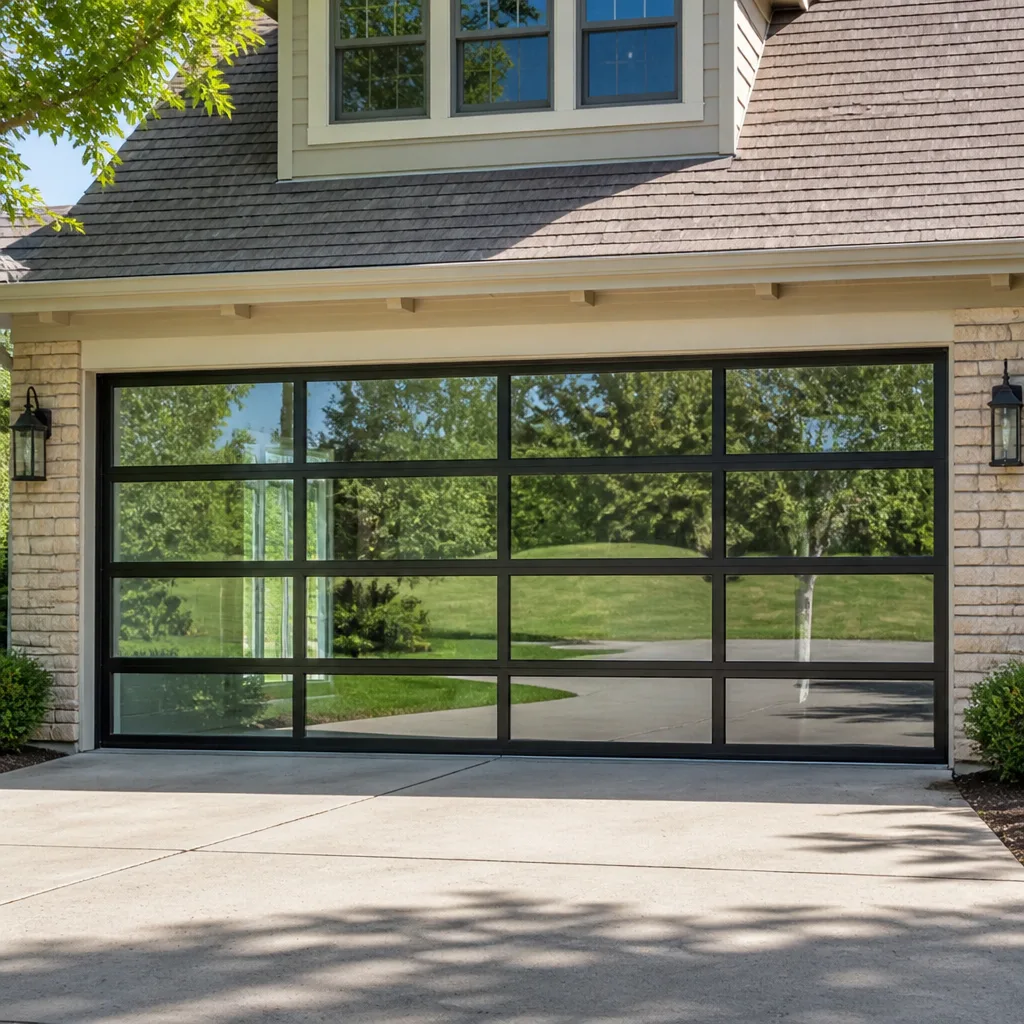 Full-view glass
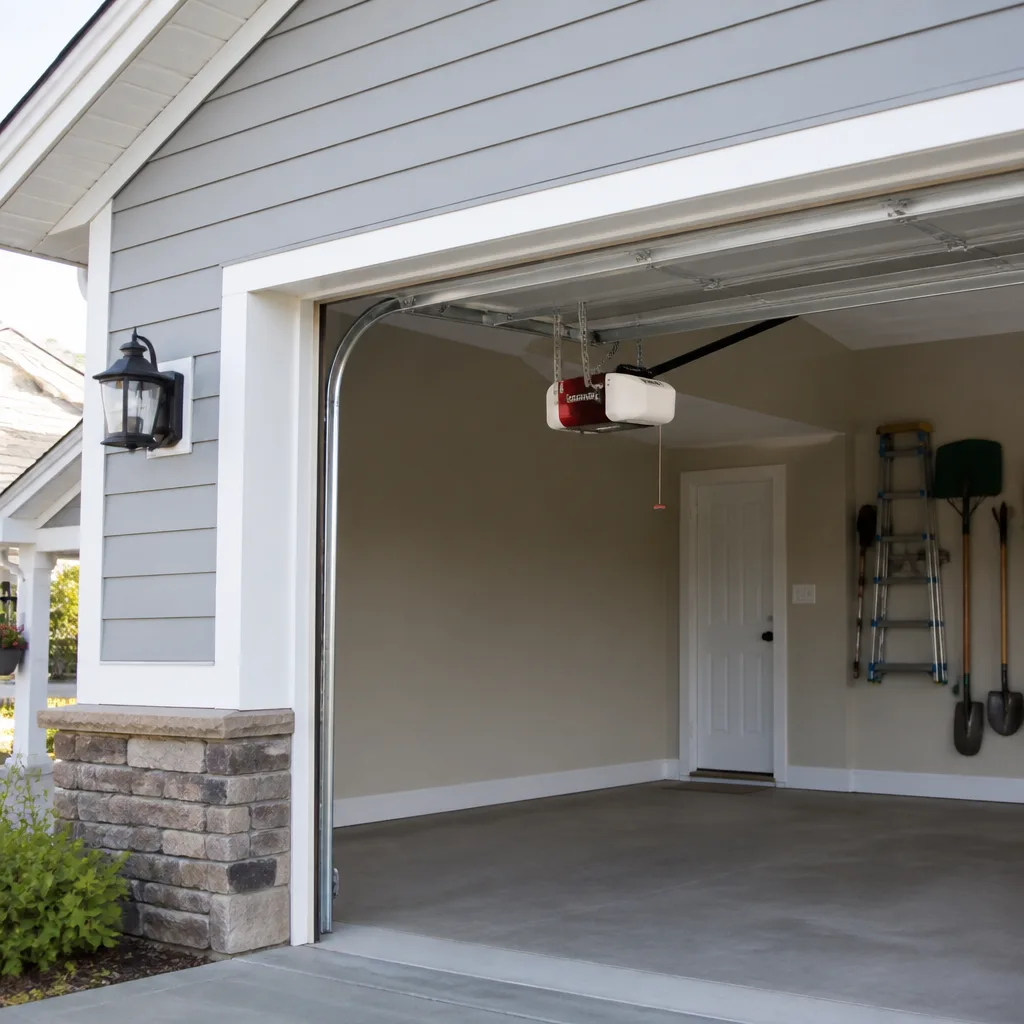 LiftMaster openers
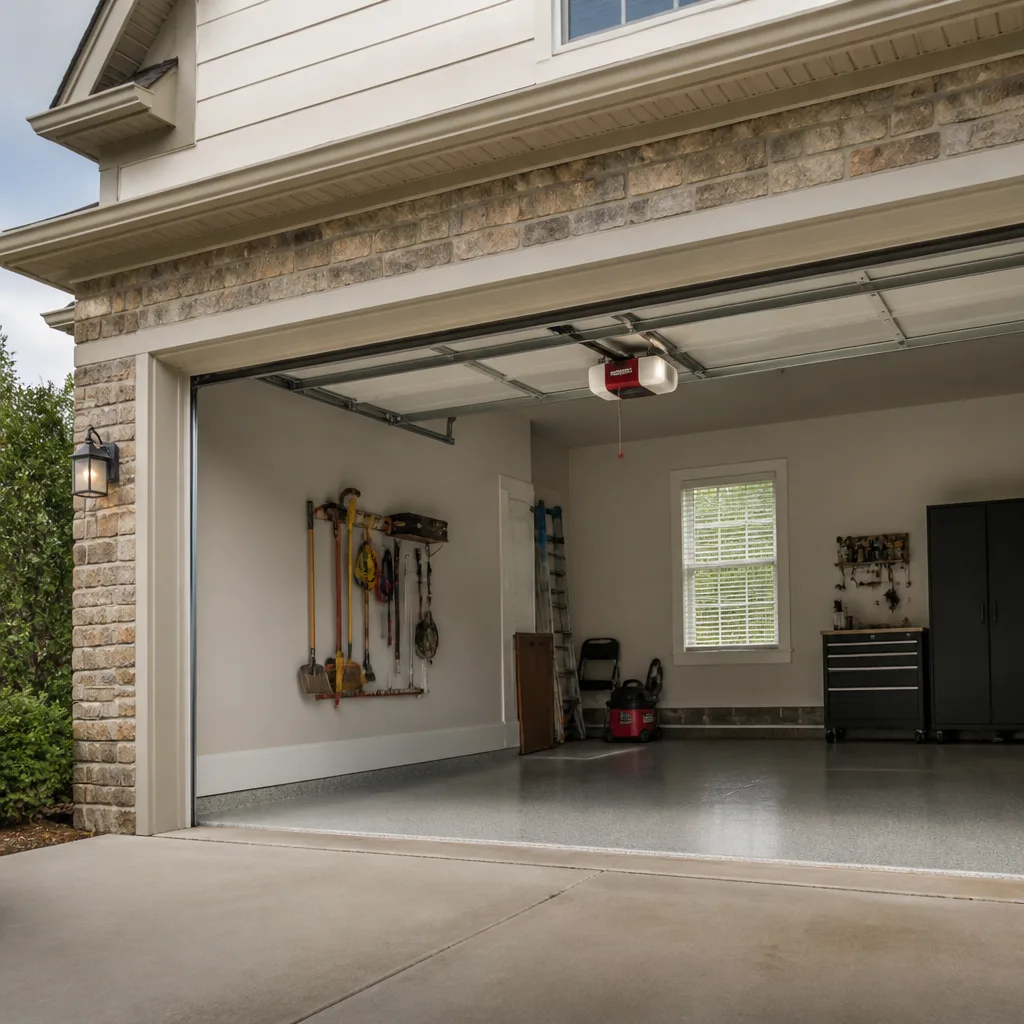 Chamberlain openers
Full 25-point door and opener safety check with every visit - springs, cables, rollers, tracks, and your LiftMaster or Chamberlain opener included
You get a price before we start. It does not change when the pro arrives.
Get your free estimateGarage Door Warning Signs: A Danbury Homeowner’s Reference Guide
Most homeowners call a garage door company on the worst day of the door’s life: the morning it won’t open, the evening a spring snaps, the moment the opener grinds and stops. Nearly every one of those failures had a warning period. Days, sometimes weeks, of small sounds and small movements that said something was wearing out. A grinding noise when your door opens isn’t just how it sounds now. It’s a mechanical signal, and depending on which noise it is, it points to one of three fixable problems. Ignore it long enough and a small repair becomes a bigger one. This guide teaches Danbury homeowners to read the sounds, movements, and symptoms that come before a failure – so you can fix the small thing before it becomes the expensive thing.
Quick Answer
The most common garage door warning signs are grinding, squealing, popping, or rattling noises; a door that moves unevenly, jerks, or reverses on its own; visible gaps, bent tracks, or frayed cables; and springs that no longer hold the door steady when you test them by hand. Any single symptom is worth investigating, but a door that reverses, drops fast, or hangs crooked means stop using it and call a technician before it fails completely. In Danbury, cold-weather operation makes several of these signs worse, so winter is when most hidden problems surface.
Styles & brands we work with
- Raised-panel steel
- Carriage house
- Modern flush
- Full-view glass
- LiftMaster openers
- Chamberlain openers
Table of Contents
- A Sound-by-Symptom Reference
- Visual Signs Most Homeowners Miss
- The 30-Second Spring Test
- Can It Wait a Week, or Stop Using It Today?
- Cold-Weather Warning Signs Specific to Danbury
- Opener Warning Signs
- Panel and Track Warning Signs
- Prevention and What to Check Seasonally
A Sound-by-Symptom Reference
The noise your door makes is the fastest diagnostic there is. Each sound tends to come from a specific part of the system, so you can describe what you hear when you call and get a much faster answer. Here’s what each sound usually means:
- Grinding: Usually the opener’s gear, the trolley on the rail, or a roller seized inside its bracket. A grinding opener often means a worn drive gear, which is common on older LiftMaster and Chamberlain units. If the door itself grinds but the opener sounds fine, it’s likely rollers or the track.
- Squealing: Almost always a lubrication problem – dry hinges, dry rollers, or a dry torsion shaft. Squealing is the least urgent of the four, but it accelerates wear on the parts it’s coming from.
- Popping: Often a torsion spring that’s about to fail, or a cable jumping off its drum. A single sharp pop followed by a door that won’t lift is the classic spring-break signature. Stop using the door if you hear it.
- Rattling: Loose hinges, loose fasteners on the panels, or a door that’s running unevenly on worn rollers. Rattling is usually minor, but it gets worse.
In our experience, homeowners who describe the sound clearly get a faster diagnosis and a more accurate estimate over the phone. It’s the simplest thing you can do. If you’ve never paid attention to how your door sounds when it’s healthy, listen to it once today, then compare. The difference between a well-maintained door and one that’s about to break is often audible a month out.
Visual Signs Most Homeowners Miss
The parts that fail first are almost always on the inside of the door or at track level, which is why so few homeowners catch them. Walk into your garage and look at the system, not the door from the driveway. Here’s what to check:
- Frayed or kinked cables: Look at the cables running down each side. Fraying, kinks, or slack mean the cable is under stress and could snap. A snapped cable can whip with real force.
- Bent or misaligned tracks: Stand at the bottom and sight up the track like you’re aiming a rifle. If either side is knocked out of line, the door squeals and the rollers wear out fast.
- Gaps at the bottom or sides: A gap in the weather seal lets in water and pests, and it’s a common sign the door isn’t sitting square anymore.
- Rust on the hinges and rollers: Even the mild humidity Danbury gets in summer will rust dry hinges. Rust means friction, and friction means wear.
- Loose bolts on panels and hinges: Grab a wrench and check the fasteners on the panels and hinges. Vibration loosens them over time, and that’s a common cause of rattling.
None of these require tools beyond a wrench and your eyes. If you find any of them, they’re worth fixing before they progress. A cable that’s starting to fray is a call-today problem; a slightly rusty hinge is a schedule-it-this-week problem.
The 30-Second Spring Test
Springs carry most of your door’s weight. When they’re near end-of-life, you can usually tell without any tools. Here’s how:
- Pull the red emergency release cord to disconnect the opener from the door.
- Lift the door by hand about halfway, then let it go.
- Watch what it does. A healthy door stays put in mid-air, or drifts slowly down. A door with weak springs will fall fast. A door will sometimes drop slowly and then speed up sharply, which is the spring telling you it’s close to failing.
If your door won’t stay up when you let go, the springs are doing less than their share of the work, and the opener is compensating. That’s the classic setup for a sudden failure. Do not try to adjust or replace a torsion spring yourself. The tension stored in a wound spring is serious, and a slip can take a finger or worse. This is work for a trained technician with the right winding bars and the right knowledge. Our team handles spring replacement as a dedicated service because it’s the most mechanically risky repair on the door, and it’s the one most often done wrong.
Once you’ve run the test, reconnect the opener and cycle the door once to make sure it’s back in normal operation. If it drops fast, don’t cycle it again. Call and describe what happened. For a full breakdown of what spring repair involves and what it costs, see our garage door spring repair page.
Can It Wait a Week, or Stop Using It Today?
The hardest judgment call is whether what you’re seeing is a “schedule it” problem or a “don’t touch it” problem. Here’s how we think about it.
Stop using the door today:
- The door reverses on its own or closes on something and doesn’t back off.
- You heard a sharp pop and the door no longer lifts.
- A cable is snapped or visibly frayed.
- The door is hanging visibly crooked.
- A spring is visibly broken.
Schedule repair within the week:
- Grinding or squealing that you can pinpoint.
- Rattling or vibration that started recently.
- Rust on hinges or rollers.
- A door that runs slower than it used to.
If what you’re seeing is in the second list, a call now saves a bigger repair later. If it’s in the first list, call and describe what you saw. For a door that isn’t safe to use, we offer emergency garage door service as part of the regular work, not as an afterthought. If you need garage door repair in Danbury, that’s exactly the kind of job we handle.
Cold-Weather Warning Signs Specific to Danbury
Danbury winters are hard on garage doors. The freeze-thaw cycle that Western Connecticut gets every year shrinks and stiffens the metal, dries out lubricant, and puts extra stress on the springs. Homeowners here often write off winter symptoms as “just the cold,” and that’s a mistake. Here’s what actually needs attention:
- Stiff or slow operation on cold mornings: Normal for a few seconds, but if the door moves noticeably slower in winter than in summer, the lubricant has dried out and the springs are being worked harder than they should.
- Loud cracking or popping on the first open of the day: Common when a torsion spring is weakening. The cold makes the metal more brittle, and that’s when a marginal spring fails.
- Frost or ice at the bottom seal: Repeated freezing can tear the seal and let water in. Check the seal at the end of every winter.
- Snow melt pooling under the door: The freeze-thaw pattern in Danbury means meltwater can refreeze overnight and stress the bottom panel.
- Squealing that only happens in winter: The cold thickens whatever lubricant is left. A door that needs grease in December will need parts in March if you ignore it.
If your door has any of these, give it a lubricant check and look at the springs. The cold-weather window is exactly when you want to fix a minor problem before it becomes a spring break at the worst possible moment. The good news is that winter symptoms, once addressed, usually don’t come back the same way next year.
Opener Warning Signs
The opener is the part homeowners notice first, because when it misbehaves, the door doesn’t move. But the opener’s warning signs are often different from the door’s, and they’re worth learning:
- The door reverses for no reason: Usually the safety sensors at the bottom of the track. Check for misalignment, dirt on the sensor lens, or a spider web. If those are clean, the sensor itself may be failing.
- Grinding when the opener runs but the door doesn’t move: The drive gear inside the opener is stripped. This is common on older Genie and Chamberlain units, and it’s fixable without a new opener.
- The remote works only from close up: A weakening battery, or interference from a new LED light nearby. Replace the battery first.
- The door only opens halfway: Usually a travel-limit setting that’s out of adjustment. On many LiftMaster and Chamberlain models it’s a simple adjustment on the head unit.
- Lights flashing on the opener: The unit is telling you what it thinks is wrong. Most major brands flash a code. Note the pattern before you call.
If your opener is past its useful life or you want to know what’s involved in replacing it, our garage door opener repair page walks through the options. We work on LiftMaster, Chamberlain, Genie, and other major brands, so if your unit is already installed, it’s probably one we know.
Panel and Track Warning Signs
Panel and track problems tend to be slower than spring or opener problems, but they’re the ones that turn an expensive fix into a full replacement if you ignore them. Signs to watch for:
- Dents in the panels: Cosmetic at first, but a dented panel can throw the door off its balance, which stresses the springs and the opener.
- Bent tracks: If either track is bent – even slightly – the door is riding unevenly. The rollers wear on one side, the opener gets loaded up, and the door squeals.
- Loose hinges: Wobbling panels, and a common cause of rattling.
- A gap between the panels: Water and debris get in and rust starts.
- Rust along the panel edges: Especially on the bottom panel, which sees the most water and salt spray from your car.
Panel replacement is often cheaper than a full door, and if only one or two panels have gone, a good tech can usually match the manufacturer’s profile and color. If the panels are past saving, a full replacement might be the better call. That’s a conversation worth having before the damage spreads. For Clopay, Amarr, and Wayne Dalton doors we see in Danbury, color matches are usually possible on newer installations.
Prevention and What to Check Seasonally
Most of the failures in this guide are preventable. The single most useful habit is a quick walk-around twice a year – once in spring after winter, and once in fall before it. Here’s what to check:
- Balance the door with the 30-second spring test.
- Listen for a new sound on the first open of the day.
- Lubricate the hinges, rollers, and springs with a proper lubricant, not WD-40.
- Check the cables and tracks for fraying, kinks, or bends.
- Test the safety reverse – put a block of wood on the threshold and cycle the door. It should reverse and go back up.
- Check the weather seal at the bottom and sides for gaps and cracks.
- Tighten the panel and hinge bolts that have loosened over the season.
If any of these turn up a real problem, that’s a good time to call so we can look at it before it progresses. We’d rather do a small repair now than a big one later, and the written estimate before any work starts keeps you in control of the cost. The seasonal check is also a good time to give Danbury Garage Door Repair Pros a call if you’d rather have a technician run through the list for you.
Common Mistakes to Avoid
- Ignoring a sound because “that’s how it sounds now.” Doors don’t gradually change their sound for no reason. A new noise is the earliest sign you’ll get of a repair that’s still cheap.
- Trying to fix a torsion spring yourself. Wound springs carry significant stored energy, and this is the one repair on the door that can seriously injure you. It’s a job for a trained technician with the right bars and the right knowledge.
- Using WD-40 on your hinges and rollers. It’s a solvent, not a lubricant. It’ll quiet the door for a week and dry out the parts faster.
- Assuming a winter squeal is “just the cold.” In Danbury, cold does dry out lubricant and shrink metal, but a persistent squeal is a specific part telling you it’s running dry.
- Skipping the seasonal check. Twice a year is enough, but skipping the fall check is when most winter failures catch people off guard.
- Calling a company that only knows one brand. If your system is a Genie, a LiftMaster, or a Chamberlain, you want whoever shows up to already know that equipment, not to be reading the manual in your driveway.
- Waiting for the door to fail before getting an estimate. A written estimate on a warning sign is cheaper than an emergency repair on a failed one. Every time.
See the difference
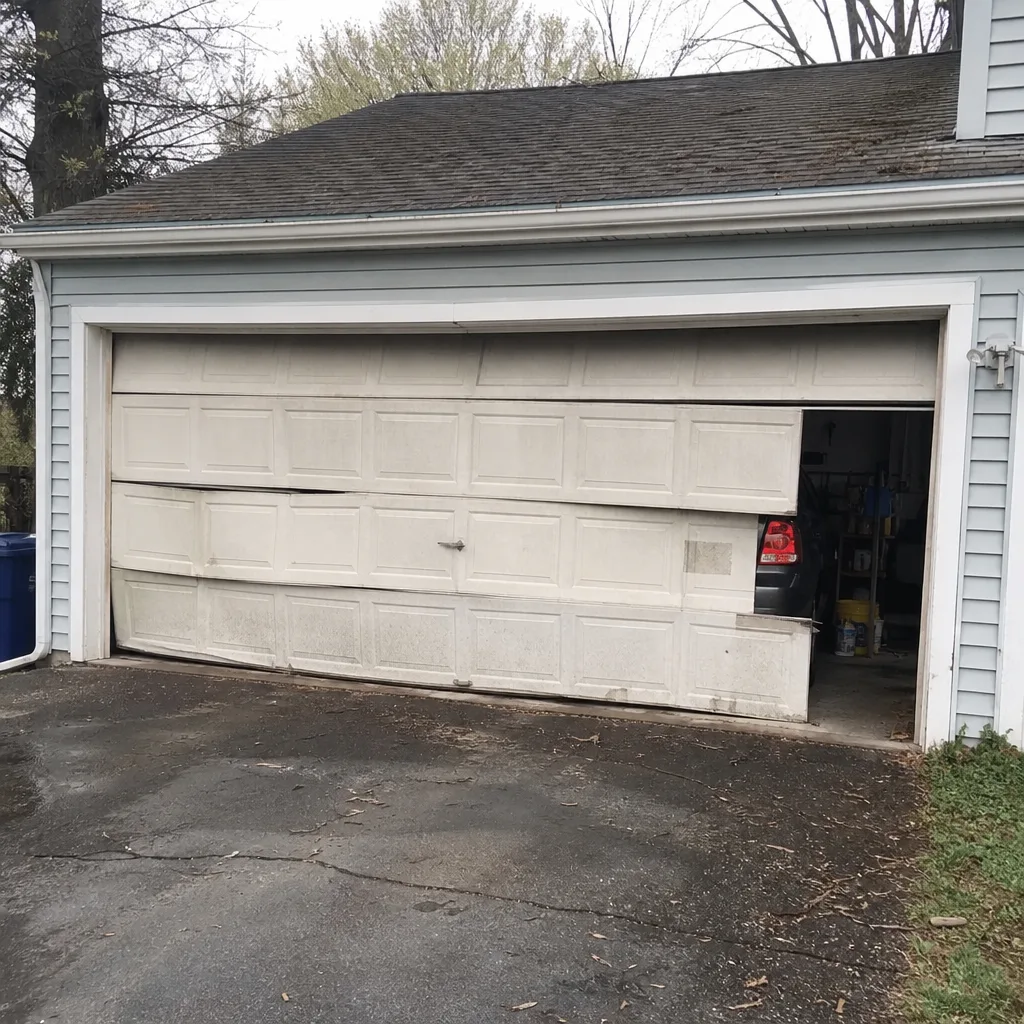 Before
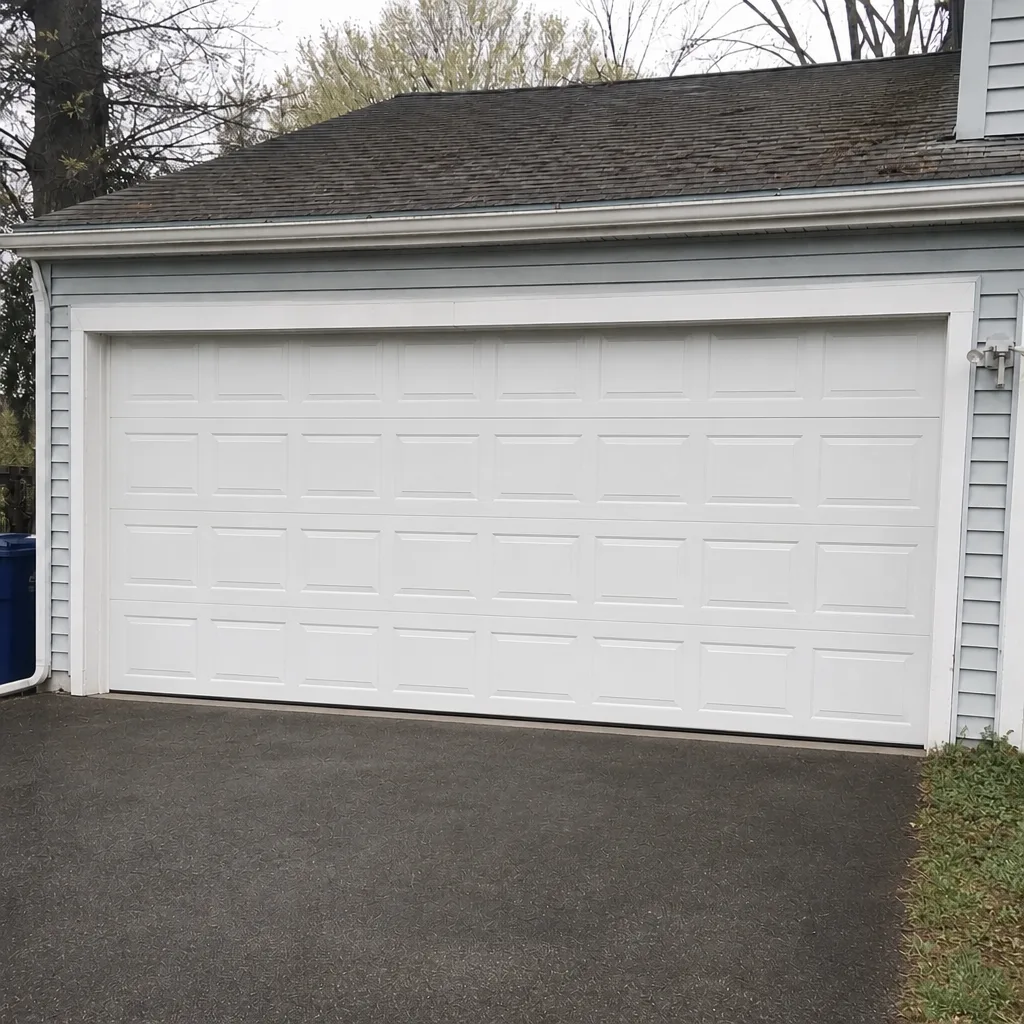 After
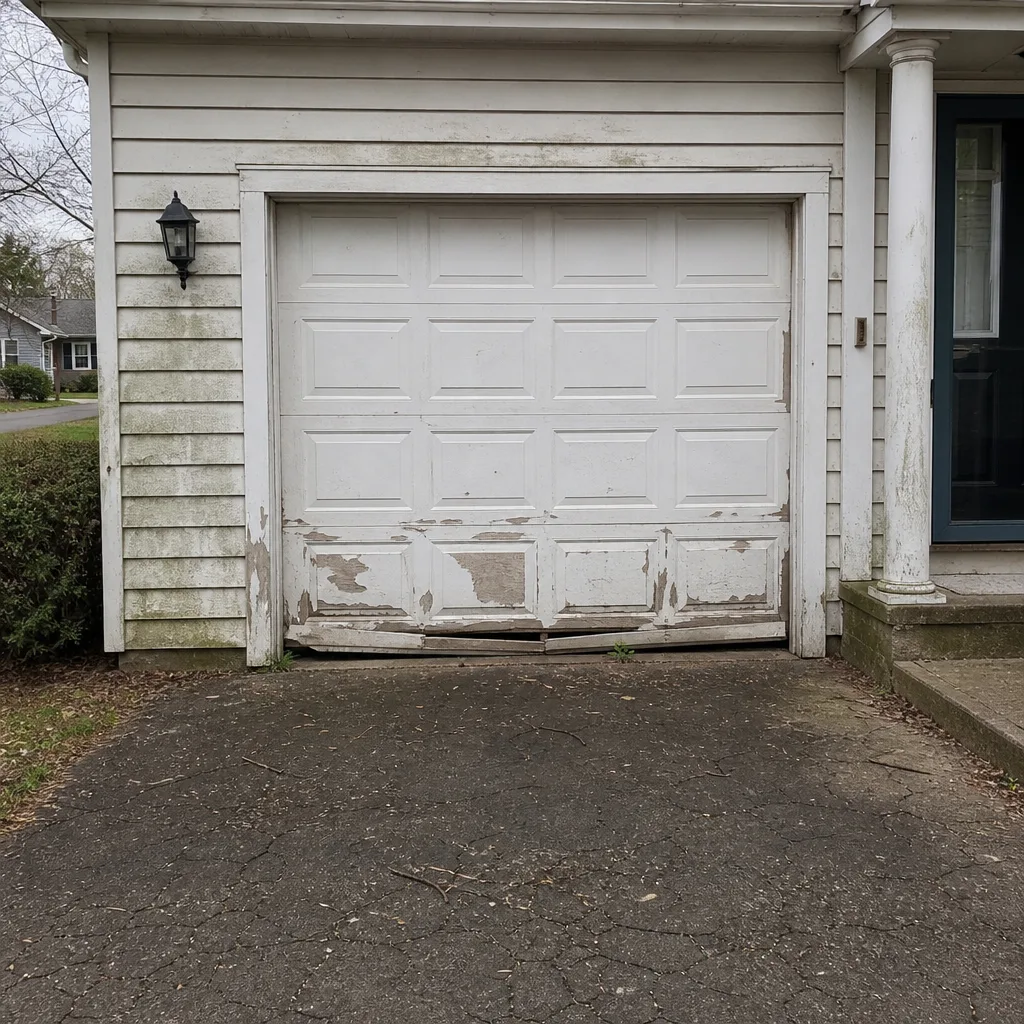 Before
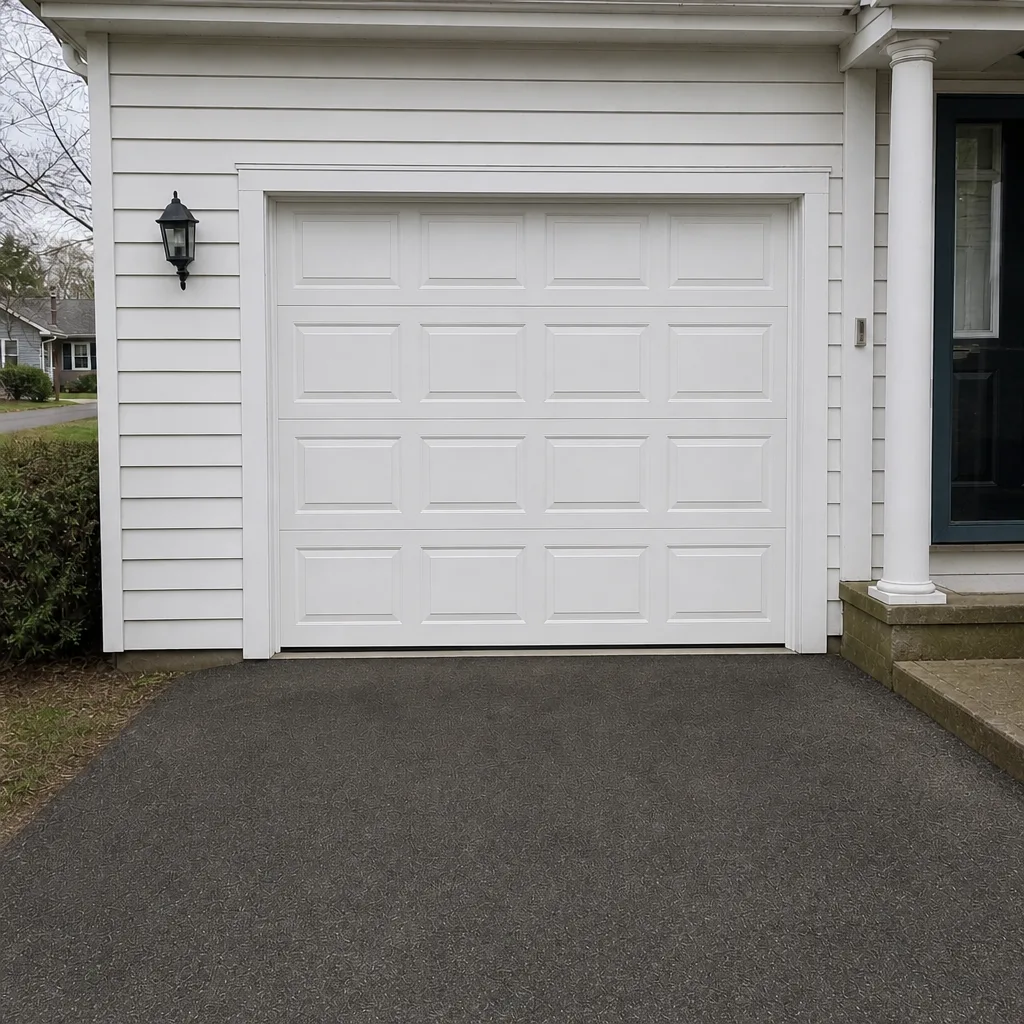 After
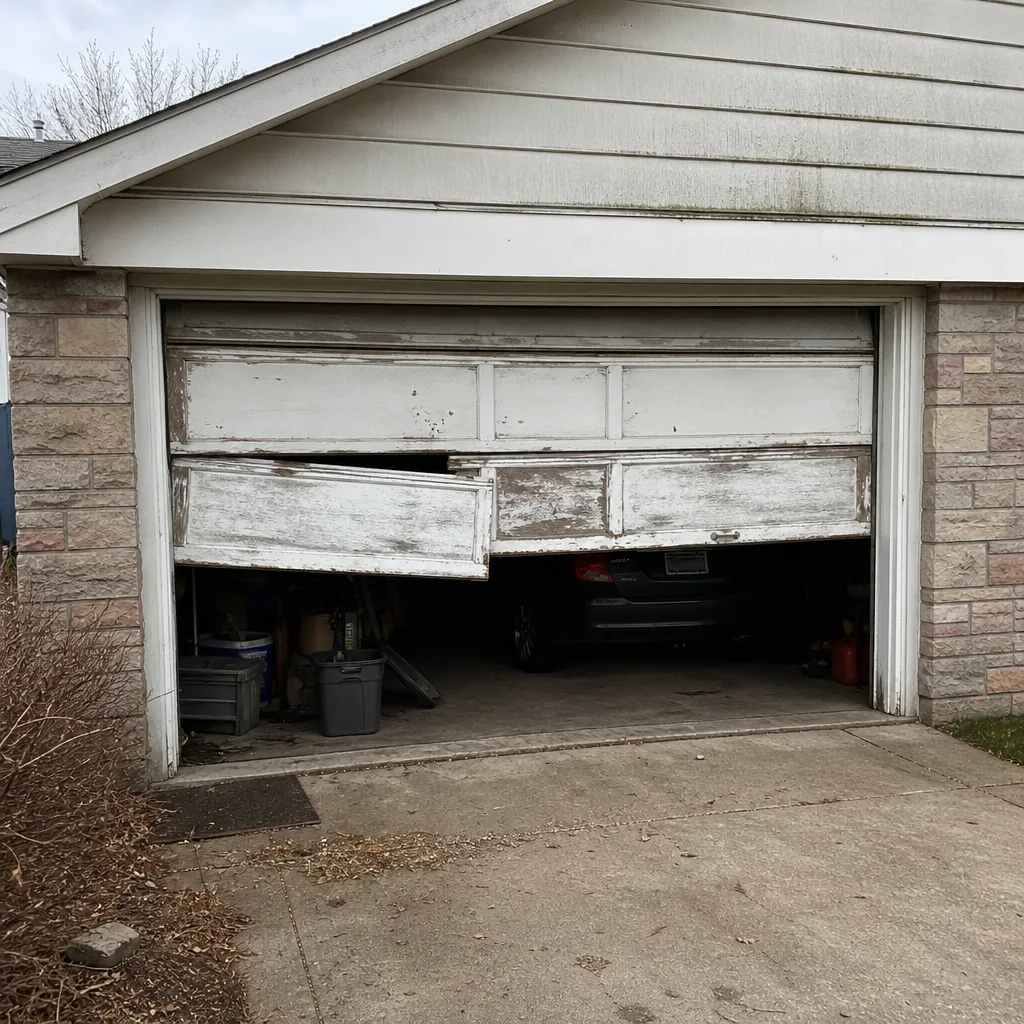 Before
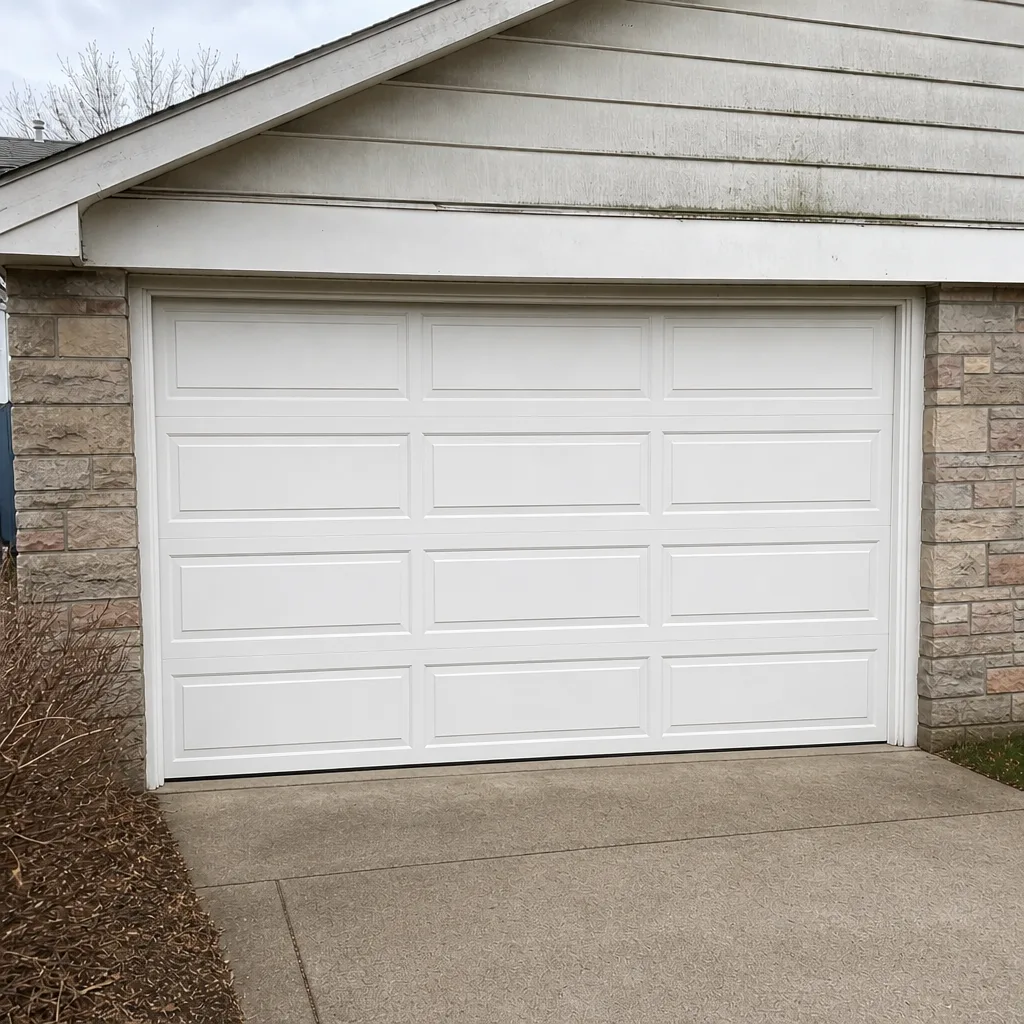 After
When to Call a Professional
Some warning signs are a “watch it” problem, and some are a call-now problem. Call us when the door reverses on its own, drops fast in the spring test, snaps a cable, hangs visibly crooked, or makes a sharp pop and won’t lift. Call for grinding or squealing you can’t pinpoint, or if the opener runs and the door doesn’t move. Call when a winter symptom shows up and you’re not sure whether it’s the cold or the spring. Danbury Garage Door Repair Pros offers free estimates in Danbury – call (855) 901-2958. Our technicians have up to 9 years of experience, and we handle spring repair, opener repair, panel work, and full door replacement. We work on LiftMaster, Chamberlain, Genie, Clopay, and other major systems already installed in Danbury homes. The price is quoted and agreed before any work starts, so you’ll know what you’re paying before anyone picks up a wrench.
Frequently Asked Questions
The earliest sign is usually a sharp popping noise, or a door that drops fast in the 30-second spring test. Sometimes it’s a door that suddenly refuses to lift on a cold morning. Any of these means stop using the door and call. A spring can fail without warning, but most give at least one signal first. Call (855) 901-2958 for a free estimate – the sooner you catch it, the cheaper the fix.
Most repair work in Danbury falls in a wide range depending on the part and the brand – a worn hinge is at the low end, a broken torsion spring and a new opener are higher up. The best way to know is a written estimate, which we provide free of charge. The price is quoted and agreed before any work starts, so there are no surprises on the invoice. Call (855) 901-2958 for an exact number for your door.
Often, yes. Many of the repairs in this guide – opener issues, panels, hinges, rollers, and the common spring work – can be handled the same day. We answer 24/7, with fast dispatch from 7am to 7pm, Sunday through Friday. We’re closed Saturday, but a call that comes in is booked into the next opening. Call (855) 901-2958 to get on the schedule.
No. The price is set by the written estimate before any work starts. If we find something different from what you described over the phone, we’ll walk you through it before touching the door. You’re never billed for work you didn’t agree to. Call (855) 901-2958 to get an estimate started.
We connect you with licensed local professionals, and the technician who comes out to your garage will be insured as their state requires. They’re trained on the major brands, including LiftMaster, Chamberlain, Genie, Clopay, Amarr, Wayne Dalton, Craftsman, and Raynor. Our technicians have up to 9 years of experience. Call (855) 901-2958 with any questions before the visit.
A real problem is consistent, loud, and repeatable – it happens every time the door moves, not just on the coldest morning. A winter squeal that fades as the day warms is usually a lubricant issue that a service visit will resolve. A squeal that gets worse over several days is a part failing. Our team can tell you which one you’re hearing. Call (855) 901-2958 to talk it through.
The Bottom Line
Garage door failures almost always come with a warning period, and the warning signs are predictable: a new sound, a small movement, a spring that no longer holds the door, a cold-morning symptom that doesn’t clear. Learn the sounds, run the 30-second spring test at the change of the season, and treat the cold-weather symptoms in Danbury as real signals rather than “just the cold.” The math is simple: a repair on a warning sign costs less than an emergency repair on a collapsed door. A written estimate before any work starts means you stay in control of the cost either way. Danbury Garage Door Repair Pros handles spring repair, opener repair, panel work, and full replacement, and we work on the brands already installed in your garage. Call (855) 901-2958 for a free estimate. We answer 24/7. Fast dispatch from 7am to 7pm, Sunday through Friday. It’s the easiest way to turn a warning sign into a small repair instead of a big one.
Written by the team at Danbury Garage Door Repair Pros.