
Last updated November 23, 2026
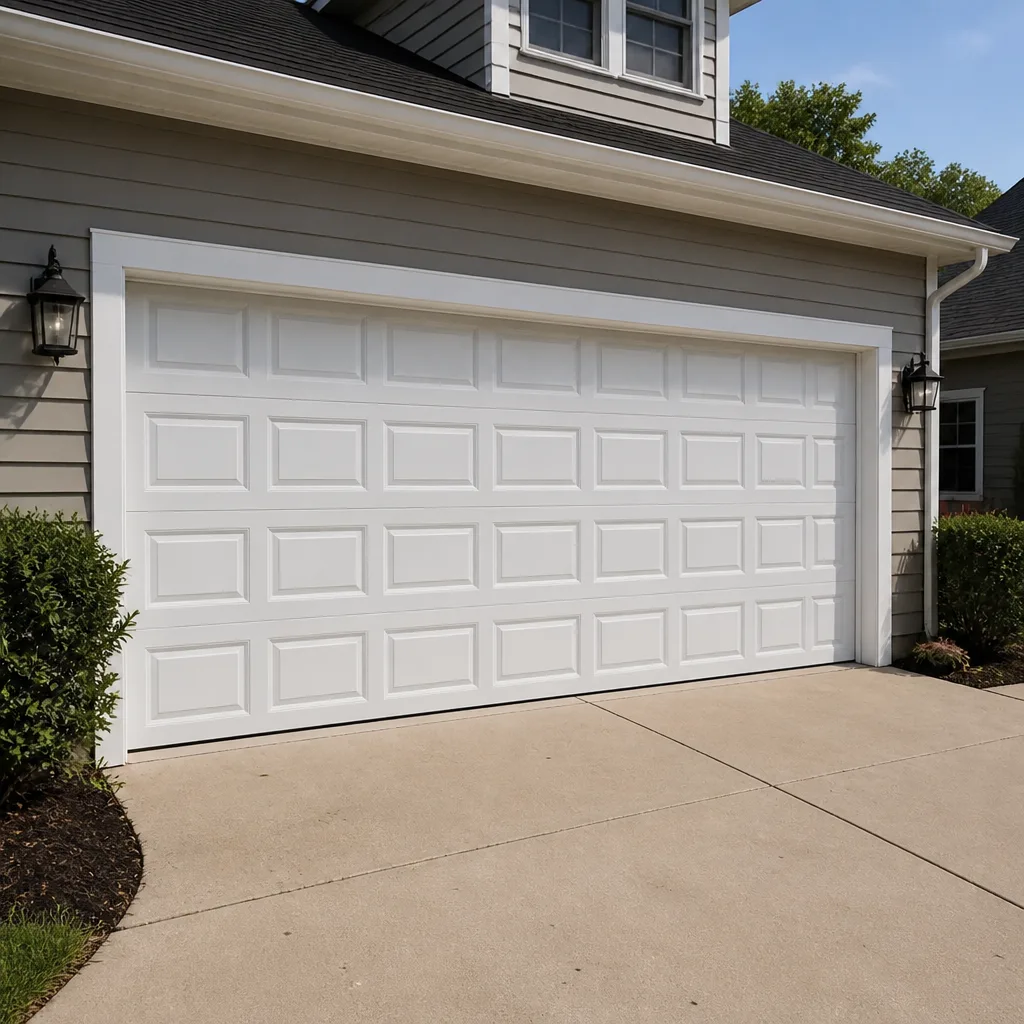 Raised-panel steel
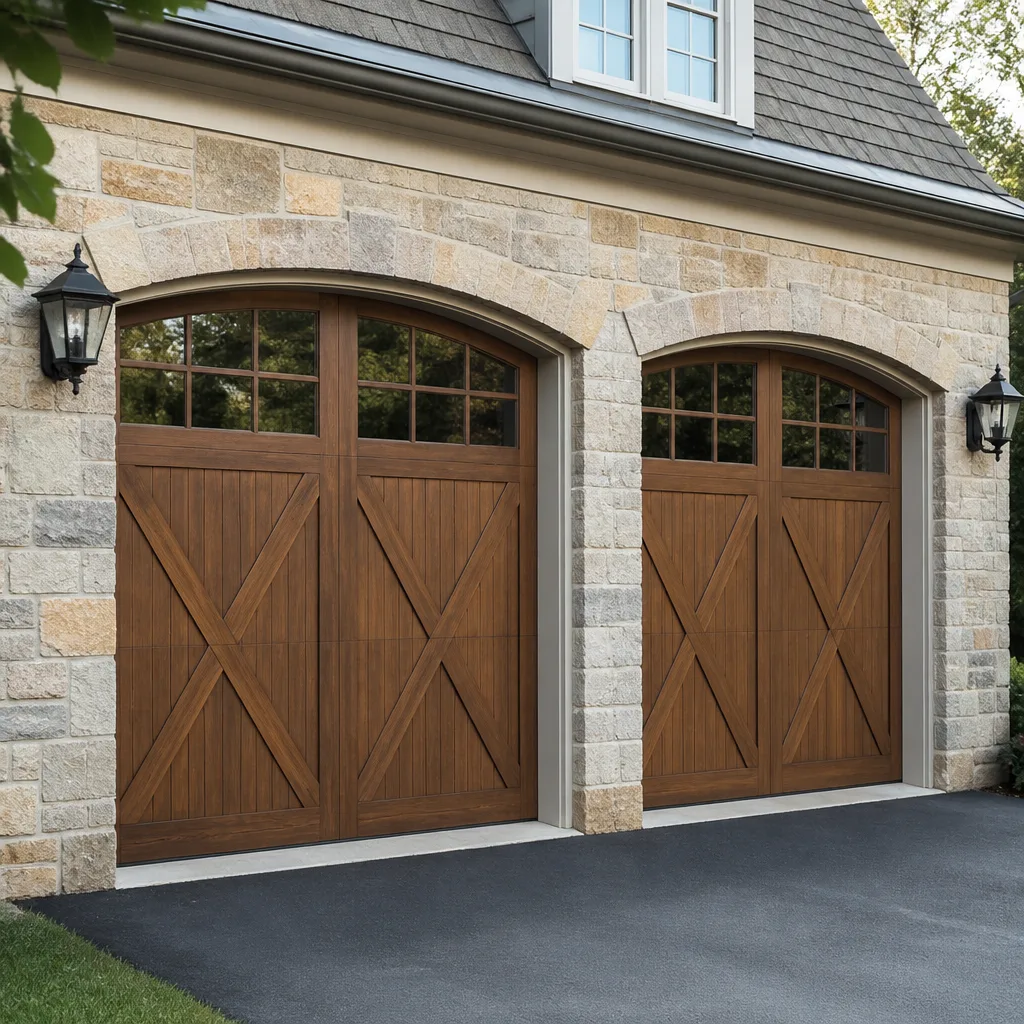 Carriage house
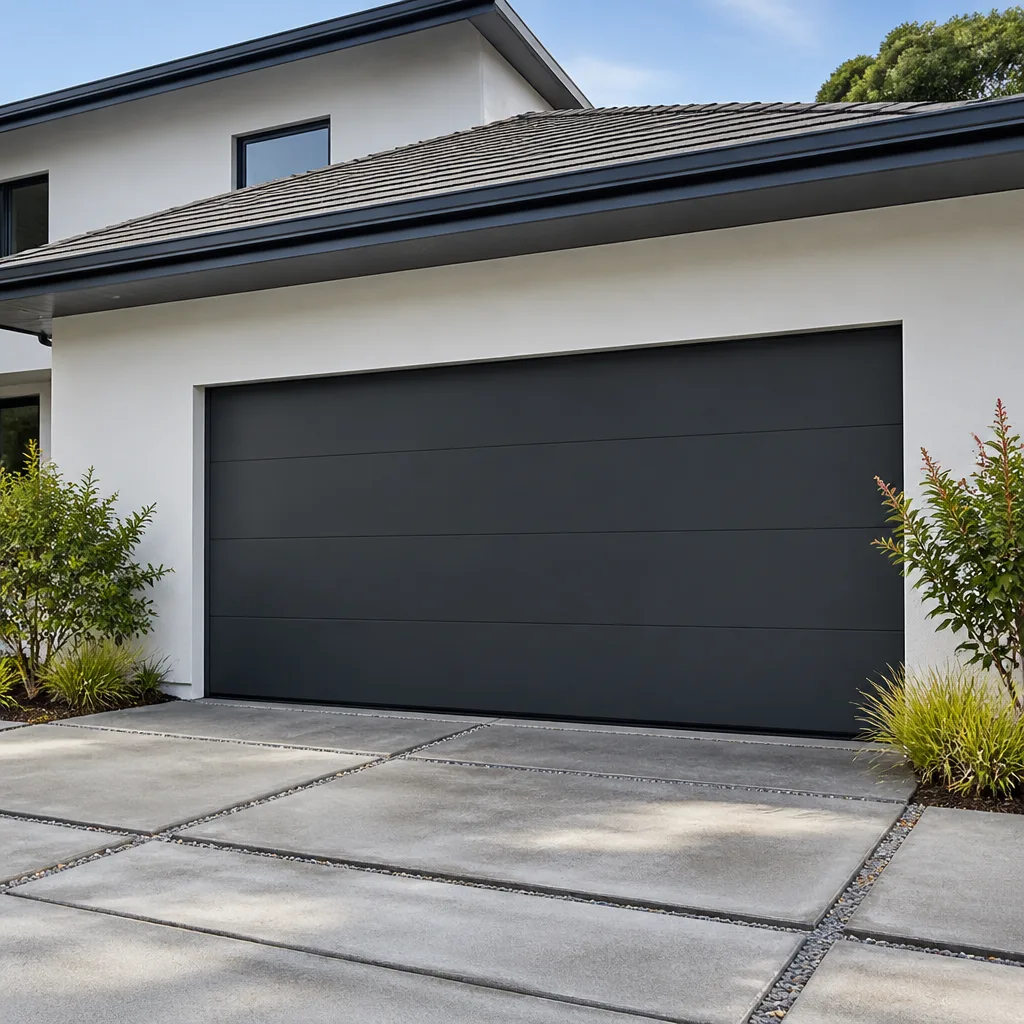 Modern flush
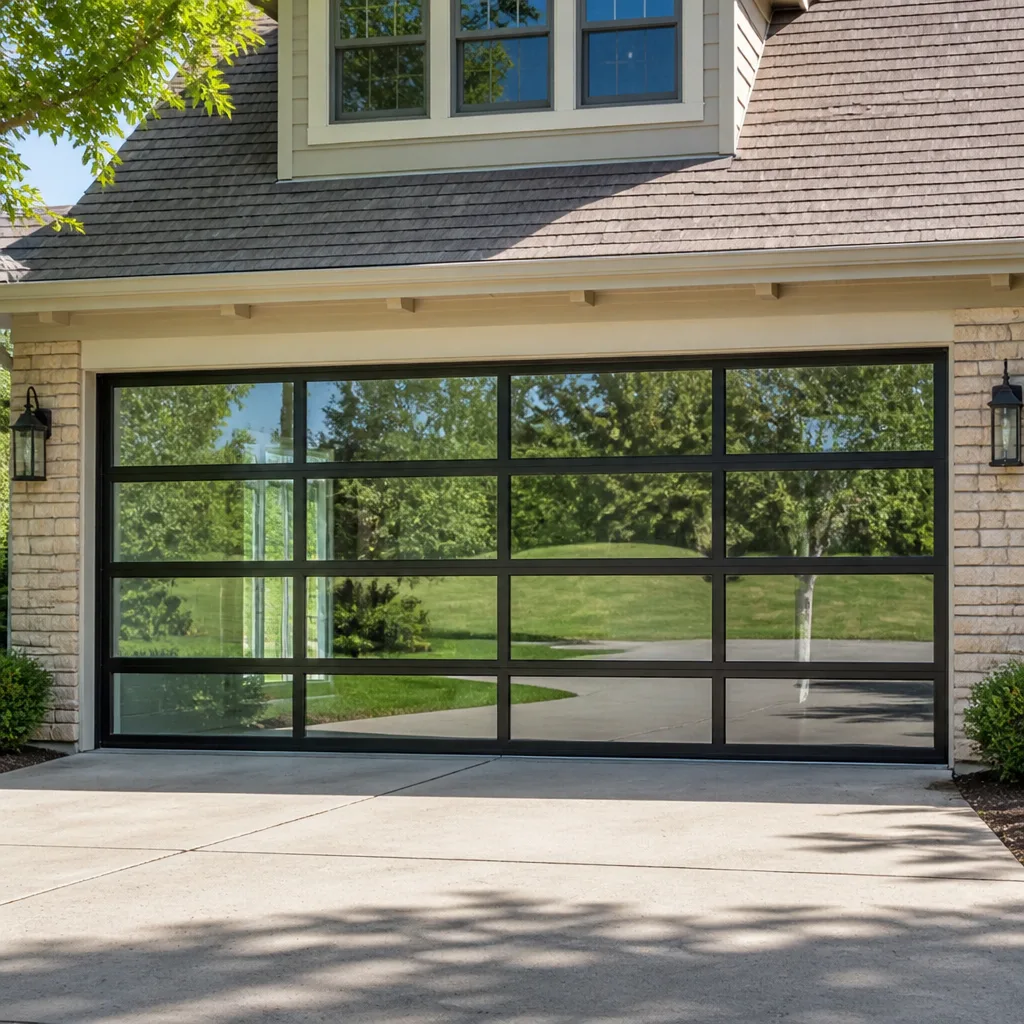 Full-view glass
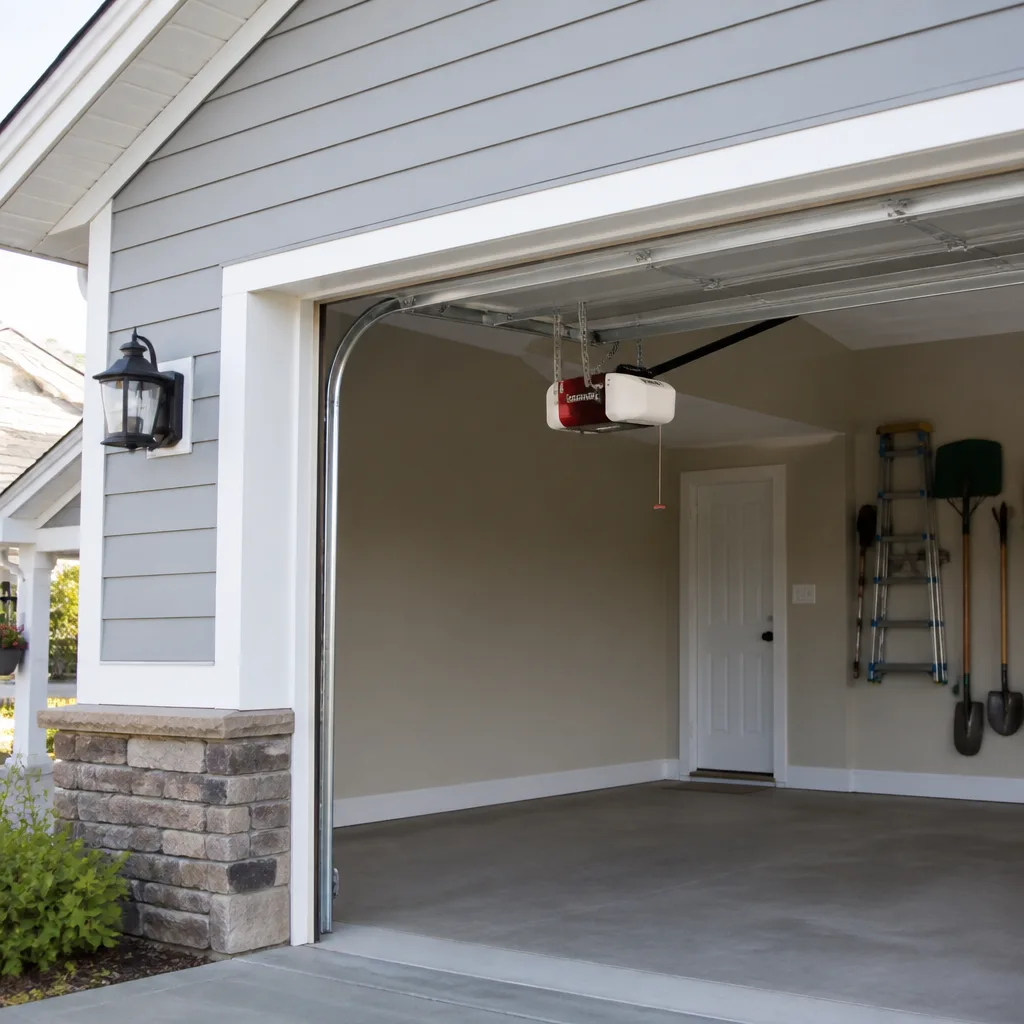 LiftMaster openers
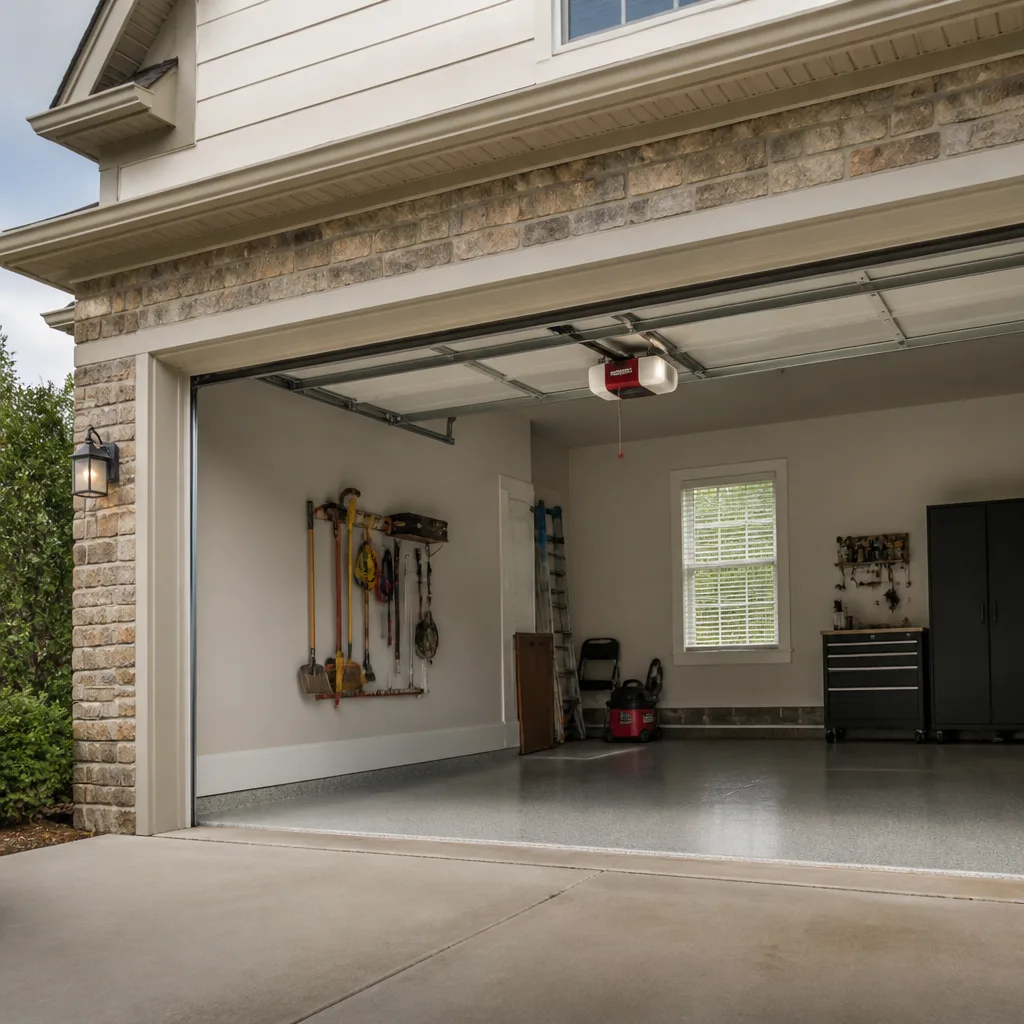 Chamberlain openers
Full 25-point door and opener safety check with every visit - springs, cables, rollers, tracks, and your LiftMaster or Chamberlain opener included
You get a price before we start. It does not change when the pro arrives.
Get your free estimateChoosing the Right Garage Door Brand: A Buyer’s Guide for Danbury
The most heavily advertised garage door brand in the showroom is not automatically the right one for your home. Brand positioning sells doors, but what keeps a door working through a decade of Connecticut winters is parts availability, steel gauge, weather sealing, and whether the technician standing in your driveway can actually get the right components. A premium label a local tech has to special-order from out of state turns a small repair into a slow one. We’re here to split the difference between marketing and specs, so you can pick a brand that holds up in Danbury and stays fixable.
Quick Answer
For a Danbury home, the right garage door brand balances four things: a steel gauge and insulation spec suited to cold, snow-belt weather; parts that local technicians can source without long delays; warranty terms written for the actual wear a CT door sees; and a style that fits your home’s architecture without paying for curb appeal you won’t recoup. Clopay, Amarr, and Wayne Dalton all build solid doors across a range of budgets, but the deciding factor is usually which one your repair pro can service quickly and which warranty holds up when you need it.
Styles & brands we work with
- Raised-panel steel
- Carriage house
- Modern flush
- Full-view glass
- LiftMaster openers
- Chamberlain openers
Table of Contents
- How We Evaluate a Garage Door Brand
- Cold-Weather Specs That Matter in Danbury
- Parts Availability: The Factor Nobody Advertises
- A No-Spin Comparison of the Brands You’ll See Most
- Warranty Fine Print for Connecticut Homeowners
- Matching Brand and Style to Your Home
- Steel, Insulation, and What R-Value Really Means
- A Step-by-Step Brand Evaluation
How We Evaluate a Garage Door Brand
A garage door brand is a brand only in the showroom. Once it’s bolted to your header, it becomes a set of physical parts, and the question is whether those parts hold up and whether they can be replaced. We judge a brand on four things a sales brochure rarely leads with.
First is construction: steel gauge, insulation type and thickness, panel steel bonding, and hardware quality. Thinner steel oilscans and dents faster under snow load and normal daily use. Second is availability: how quickly a local technician can get the panels, springs, rollers, and opener components for that door. Third is warranty honesty: how the brand words its coverage for panels, hardware, and labor. Fourth is living cost: how often a given door needs adjustment, its hardware replaced, or a coil swapped, over a full season in New England.
None of those four is determined by the logo on the box. We’ve worked on enough systems to see premium-brand doors whose hardware outlasts everything around it, and value-brand doors that give fifteen trouble-free years when correctly installed. The brand sets a starting point; the install and the local service fix the outcome.
When we talk about our own range, it’s simply this: we service LiftMaster, Chamberlain, Genie, Clopay, Amarr, Wayne Dalton, Craftsman, and Raynor. That means when you’re choosing a brand for your Danbury home, you’re not steering toward one because the technician only knows that one. Our technicians have up to 9 years of experience across these systems, and their read on a given brand is built on repairs, not brochures.
Cold-Weather Specs That Matter in Danbury
Danbury sits in a cold, wet New England climate with real snow, ice, and freeze-thaw cycles, and a garage door lives on the edge of that weather. The specs that matter for a Danbury door are different from what holds up in a mild climate.
- Steel gauge: A door facing a cold, storm-prone climate benefits from a thicker steel gauge. Gauge is measured so a lower number means thicker steel; a heavier-gauge door resists dents from shovels, plow spray, and ice. Thinner steel is more likely to oil-can and to rust faster at the seam.
- Insulation: An uninsulated or lightly insulated door on a cold morning sweats and frosts on the inside, which feeds rust and warps panel edges. A polyurethane-core or thicker polystyrene door holds temperature better, and the door runs quieter and lives longer.
- Seals and weatherstripping: Bottom seal quality, jamb seals, and a good top seal keep snowmelt and driven rain out. A weak seal lets water pool at the door’s base, which is exactly where a steel door ages fastest. This is where a lot of Danbury doors fail first.
- Hardware finish: Hinges, rollers, and track finish matter more here because road salt and long wet seasons take a toll on cheaper plating. Heavier plated hardware lasts longer.
- Spring and opener compatibility: A heavier insulated door needs springs and an opener rated for that weight. A brand that pairs its door with the right torsion springs and a matching opener head is worth more than a brand that leaves that decision to whoever installs it.
In short, for a Danbury home, choose a door whose steel and insulation you can name, not just a brand whose color you like. If you’re not sure what spec your current door carries, a technician can read the door’s tag and tell you what you have and what a replacement would be. When a cold snap finally breaks a spring, that’s exactly when we get the call for garage door spring repair, and it’s also the moment a homeowner who chose a well-specced door notices the difference.
Parts Availability: The Factor Nobody Advertises
The most important brand question for a Danbury homeowner isn’t “how good is this brand” but “how fast can this brand’s specific parts be replaced.” A door’s weakest moment is the one where a panel, a spring, or an opener circuit won’t come quickly.
In this market, the doors and openers we see most often are the ones you can get parts for locally. Clopay, Amarr, and Wayne Dalton are common on Danbury homes and their common wear parts are stocked or quickly sourced. The openers are similar: LiftMaster, Chamberlain, Genie, and Craftsman dominate residential use, so their belts, gears, and logic boards are things a technician can often put in the same visit.
The exceptions are the “premium” brands that look great on a showroom floor but route parts through a single national distributor. A door built with proprietary hardware, or a brand where a panel or opener board has to be ordered from out of state, can turn a small problem into a real delay, even though the door itself is perfectly good.
This is why one of the questions worth asking before you buy is: who will fix this, and can they get the parts? We work on the whole set of brands above, so we can tell you up front what’s stocked and what needs to be ordered. That also means the brand conversation and the repair conversation happen with the same phone call, which is the point of choosing a multi-brand garage door team in Danbury instead of chasing two vendors. If something does break, you already know the answer to “who do I call,” and it’s not a call center at a national factory.
The practical rule: for a home in Danbury, a slightly less prestigious brand with locally stocked parts beats a prestigious brand with a two-week parts pipeline. You live with the repair turnaround far longer than you enjoy the label.
A No-Spin Comparison of the Brands You’ll See Most
Here’s an honest read on the brands most commonly sold and serviced in Danbury homes. Every one of them is a legitimate option; the differences are in where each shines and where each asks you to compromise.
Clopay
Clopay builds a wide range of doors, from budget builder-grade steel to insulated premium lines, and it’s among the most common doors on Northeast homes, so a technician can usually get common parts quickly. It does well with style options and insulation. Where it falls short: at the entry level, the value lines are thin-gauge doors that don’t hold up as well under heavy use, plus the more proprietary steel door panels can still require a short order. For a Danbury home, Clopay’s insulated lines are the sensible pick.
Amarr
Amarr doors are solidly built and widely available through local dealers, and the brand is known for competitive pricing at the insulated end. It’s a good fit for a homeowner who wants a well-built door without paying for a boutique name. The compromise: fewer exotic styling choices, and the convenience of parts depends on the local dealer network. In Danbury, common Amarr wear parts are generally within reach of a local technician.
Wayne Dalton
Wayne Dalton straddles commercial and residential with a strong reputation for durability, and it’s common on homes around here. It does well with heavier-duty doors and has a broad model range. Where it asks for compromise: some of its lines use proprietary components, so a panel or opener part may need ordering rather than a shelf pickup. That doesn’t mean the door isn’t good; it means the buyer should know before the part breaks.
Craftsman
Craftsman is everywhere on the opener side, and its door line is straightforward and affordable. The strong point is that a Craftsman opener is one of the most serviceable units on a typical bench, so a technician knows the belts, gears, and boards. The shortfall: door product lines can be limited and parts support has narrowed over the years, so verify a replacement part is available before you base your choice on the name. For Danbury homes, a Craftsman opener is a fine thing to have; a Craftsman door purchase deserves a quick parts check first.
Any of these brands can serve a Danbury home well. The decision point is what you’re buying: a quick parts supply chain and honest warranty, or a styling premium you’re paying for and may not need.
Warranty Fine Print for Connecticut Homeowners
Garage door warranties are where brand positioning and brand reality part company most sharply. The words “limited lifetime” mean very little until you read what’s limited and for whom, and Connecticut’s climate tests those terms out.
Watch for these differences:
- What’s covered vs. not: Many brands warranty the steel panel against rust-through but not rust itself, and some exclude “environmental” corrosion entirely. That’s a big deal in a snow-belt climate where road salt and freeze-thaw cycles speed corrosion at the panel base.
- Labor vs. parts: A parts-only warranty means the brand will send you a replacement panel, but not the truck or technician to install it. Read whether labor is covered, and for how long.
- Original purchaser only: Many limited lifetime warranties apply only to the original owner and don’t transfer. If you plan to sell your Danbury home, a transferable warranty is worth more than a brand with a longer but non-transferable one.
- Install responsibilities: Warranties frequently void or soften if the door wasn’t installed by a brand-dealer-certified installer. That can matter when you choose a contractor. We connect you to vetted local professionals who install to manufacturer spec so the warranty holds.
- Prorated terms: Some hardware and insulation warranties prorate after the first few years. Ask what you’d actually get back in year ten.
Our rule: a warranty you can read in plain language and actually collect on beats a longer one layered with exclusions. Bring the warranty text to the estimate conversation and make the technician explain what’s excluded, in writing.
Matching Brand and Style to Your Home
Garage door style is a design decision, but it’s also a resale decision, and in the Danbury market not every design upgrade earns its cost back. Matching the door to the house is worth more than buying the most expensive style.
Danbury and its surrounds mix colonial, ranch, Cape Cod, and newer construction, and each has a natural pairing. Raised-panel steel in white or almond fits most colonial and ranch homes and is the easiest to resell. Carriage-house style with decorative hardware suits Cape and cottage homes, but it’s a clear style premium that not every buyer values. Contemporary flush panels fit modern builds and can look odd on a colonial. The safest resale choice is a clean, insulated raised-panel door in a neutral color that matches the trim, not the most elaborate style on the lot.
Where homeowners overspend: glass-look inserts, high-end woodgrain finishes, and full-custom trim on a door that will be repainted in a few years anyway. Those details rarely return their cost in resale. Where it’s worth spending: better insulation and thicker steel. That spending stays visible in your energy bills and your door’s life, not just in a stylized look a buyer might not share.
Get the style right and the brand becomes close to irrelevant. A modest raised-panel door on the right house looks better than a premium door that fights the architecture.
Steel, Insulation, and What R-Value Really Means
Insulation is the spec most buyers get sold on and least understand. “R-value” is the measure of a material’s resistance to heat flow, and for a garage door it matters mostly in how it affects temperature around the door, not the whole house.
A garage door is not your living-room wall. It sits in front of an unconditioned space. The real value of an insulated door is that it stays quieter, resists condensation and frost, and keeps the garage usable through winter. A door with a polyurethane core at a higher R-value can help a garage that shares a wall with the house, but the difference between an entry-level R-value and a mid-tier one is modest; the difference between an uninsulated and an insulated door is significant. Don’t pay for the very highest rating if the garage is unheated and unused.
The steel itself matters as much as the insulation. A thicker-gauge door with a modest core usually outlasts a thin door with a high R-value, especially in a climate where the door takes stress from wind and cold. We’d rather see a homeowner put the budget into steel gauge and a solid bottom seal (see garage door repair if the seal needs replacing) than chase the top R-value on a thin panel.
The practical answer for a Danbury garage: a polyurethane-insulated steel door of mid-range R-value, in the right gauge and sealed properly, handles the climate well. The rest of the budget is better spent on a quality install and a service relationship than on insulation ratings above the practical need.
A Step-by-Step Brand Evaluation
Use this sequence before you sign anything. It turns the brand question into a series of concrete checks, and it works for any budget.
- Name the spec, not the brand: Ask for the steel gauge, insulation type, and seal spec in writing. If the seller can’t name them, the brand is doing the talking instead of the door.
- Ask about parts: For your chosen brand and model, ask how a technician replaces a panel, a spring, or an opener board locally, and how long that takes. If the answer is “we’ll order it,” know the timeline before you buy.
- Read the warranty exclusions: Note what’s excluded (rust, environmental corrosion, labor, transfer) and compare that to how long you plan to live in the home.
- Match the style to the house: Choose a raised-panel or carriage style in a neutral color that suits the architecture and is easy to resell.
- Confirm the installer knows the brand: A door installed to spec keeps its warranty. Ask that the install be done by a pro experienced with that manufacturer’s system.
- Ask about the opener as one system: A door is only as good as the opener and springs behind it. If you’re already dealing with opener trouble, garage door opener repair is something we can check alongside the door.
That’s the whole method. The brand you pick matters, but the spec sheet, parts timeline, and warranty fine print matter more. We work in Danbury every week and see which brands hold up and which ones keep a technician waiting on a panel, and we’ll tell you plainly before you decide. When you’re ready to compare options on your home, we can lay out what each brand means for your door, your climate, and your repair turnaround.
Common Mistakes to Avoid
- Buying the brand, not the spec. The name on the door tells you little about steel gauge or insulation type. Buy by the numbers on the tag, not the logo on the brochure.
- Ignoring parts availability for your model. A brand that’s excellent in general can have a specific model with a slow parts pipeline. A panel ordered from out of state turns a Saturday fix into a two-week wait.
- Paying for curb appeal that won’t resell. Glass inserts, high-end woodgrain finishes, and elaborate trim are where Danbury homeowners most often overspend on a door no buyer will pay more for. Neutral, insulated, raised-panel is the resale-safe choice.
- Assuming “limited lifetime” covers rust. Many warranties exclude environmental corrosion, which is exactly what a snow-belt climate produces at the door base. Read the exclusions before you buy.
- Replacing the door without checking the opener and springs. A heavier new door needs springs and an opener rated for the weight. A mismatched system wears out faster and can strain the opener.
- Choosing a thin-gauge door to save on the front end. In a cold, snowy climate, a thin door dents, rusts at the seam, and sweats through winter. The savings rarely survive five years.
- Skipping the installer question. A great door installed to a poor standard voids warranty and lives shorter. Confirm the installer is experienced with that brand.
See the difference
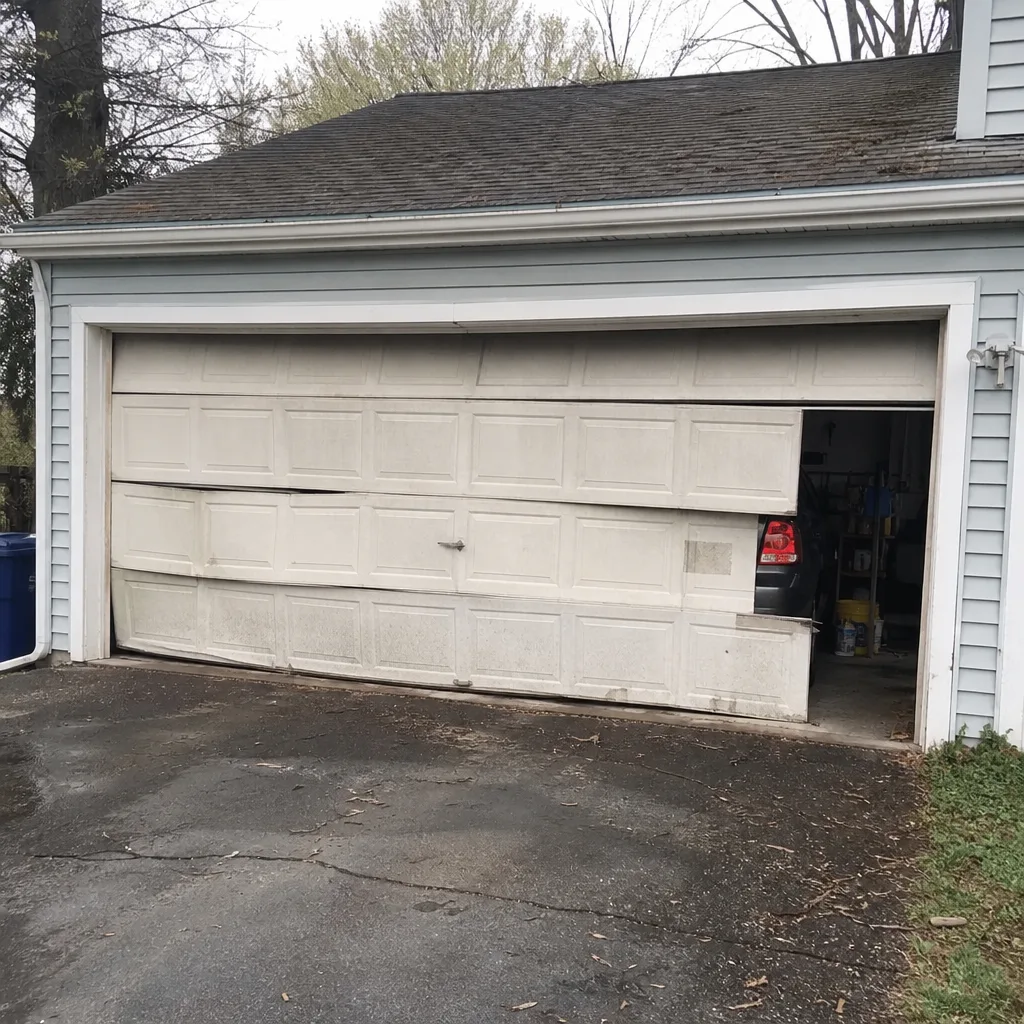 Before
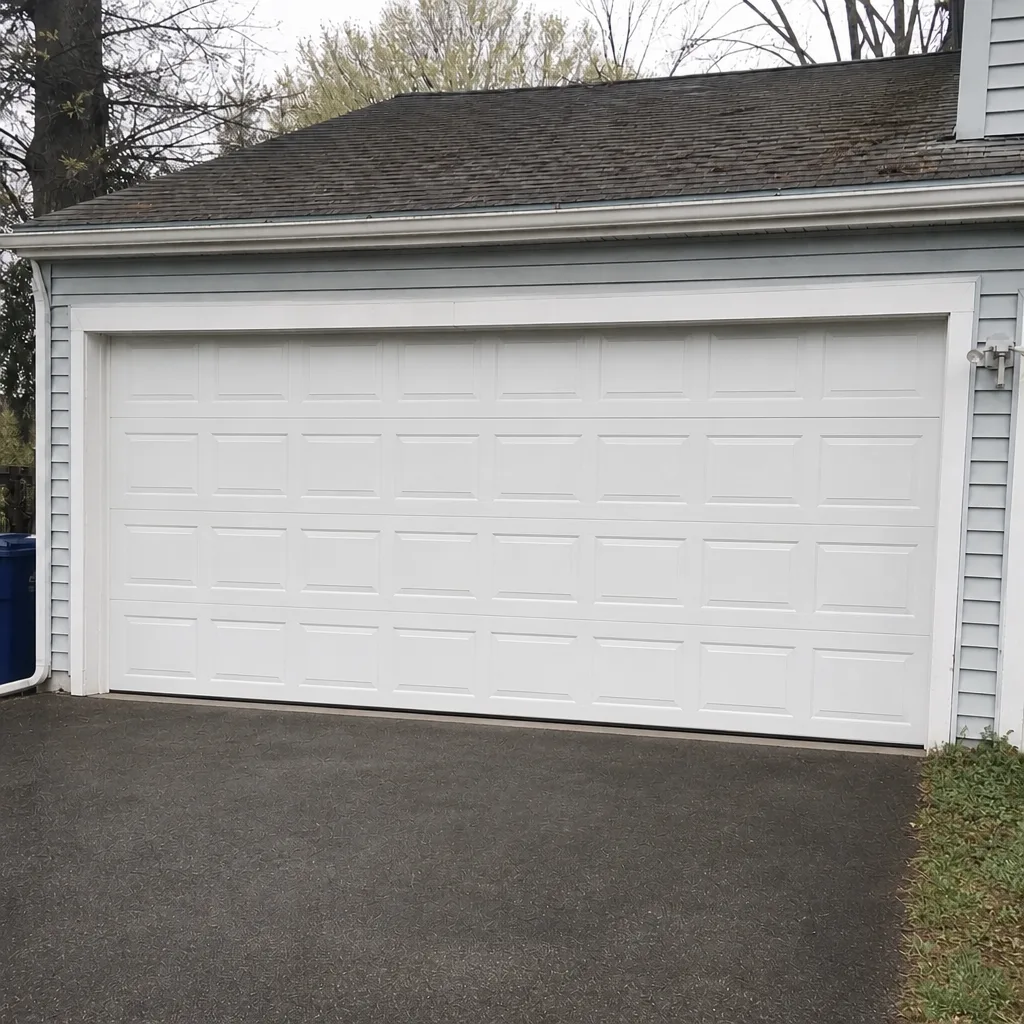 After
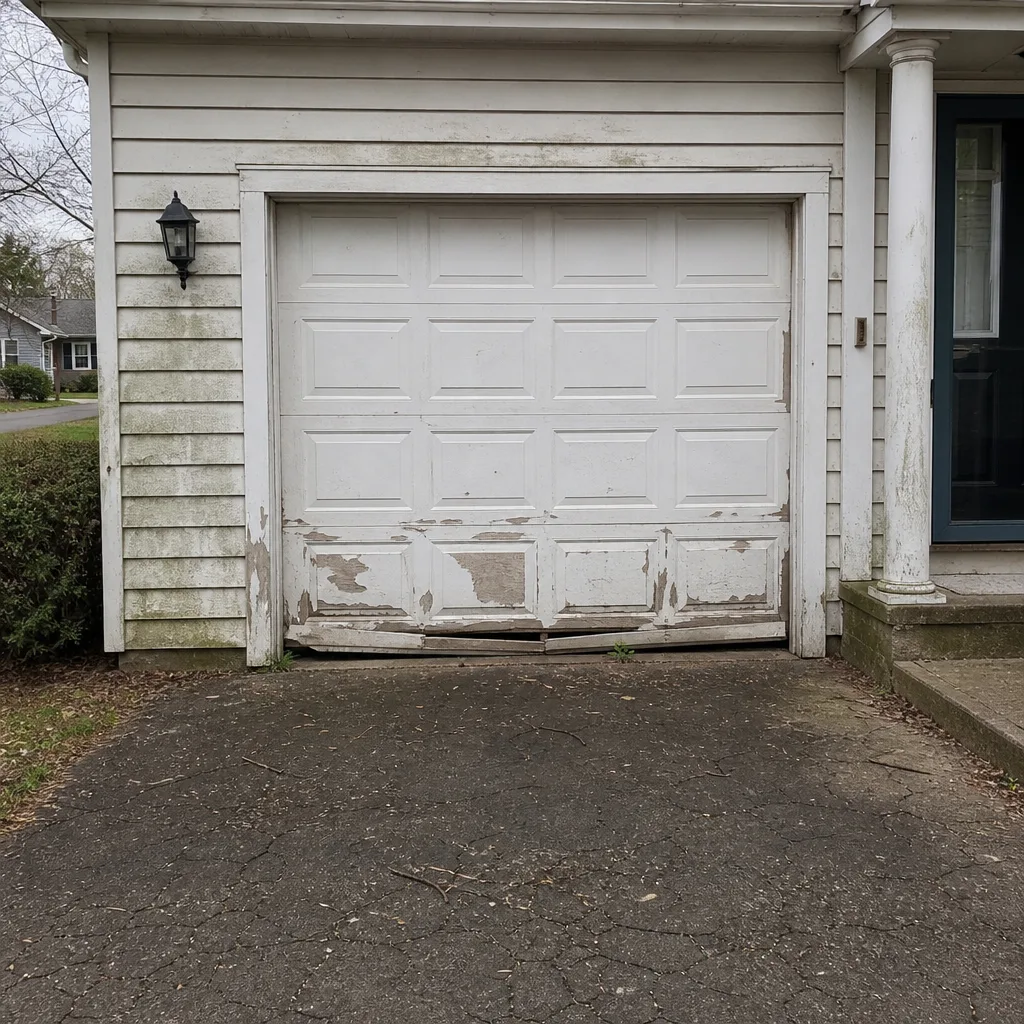 Before
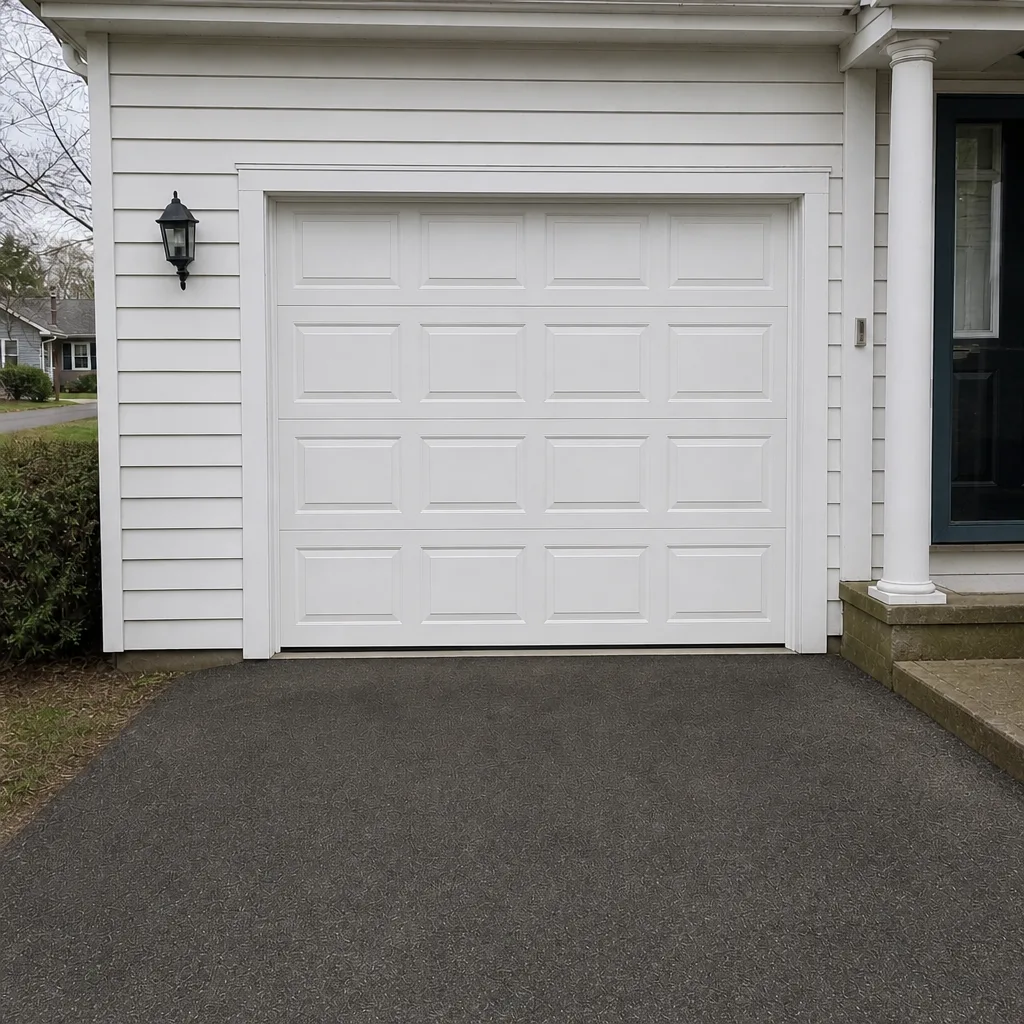 After
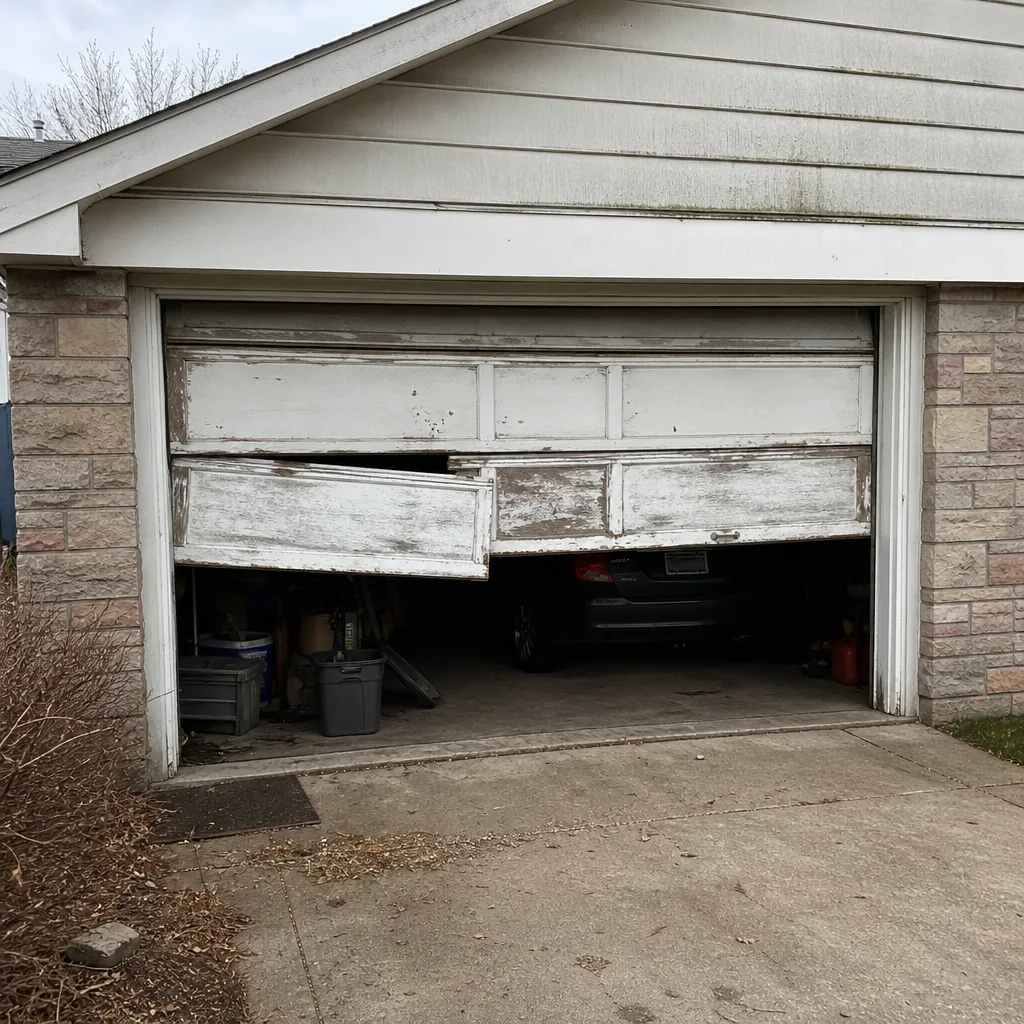 Before
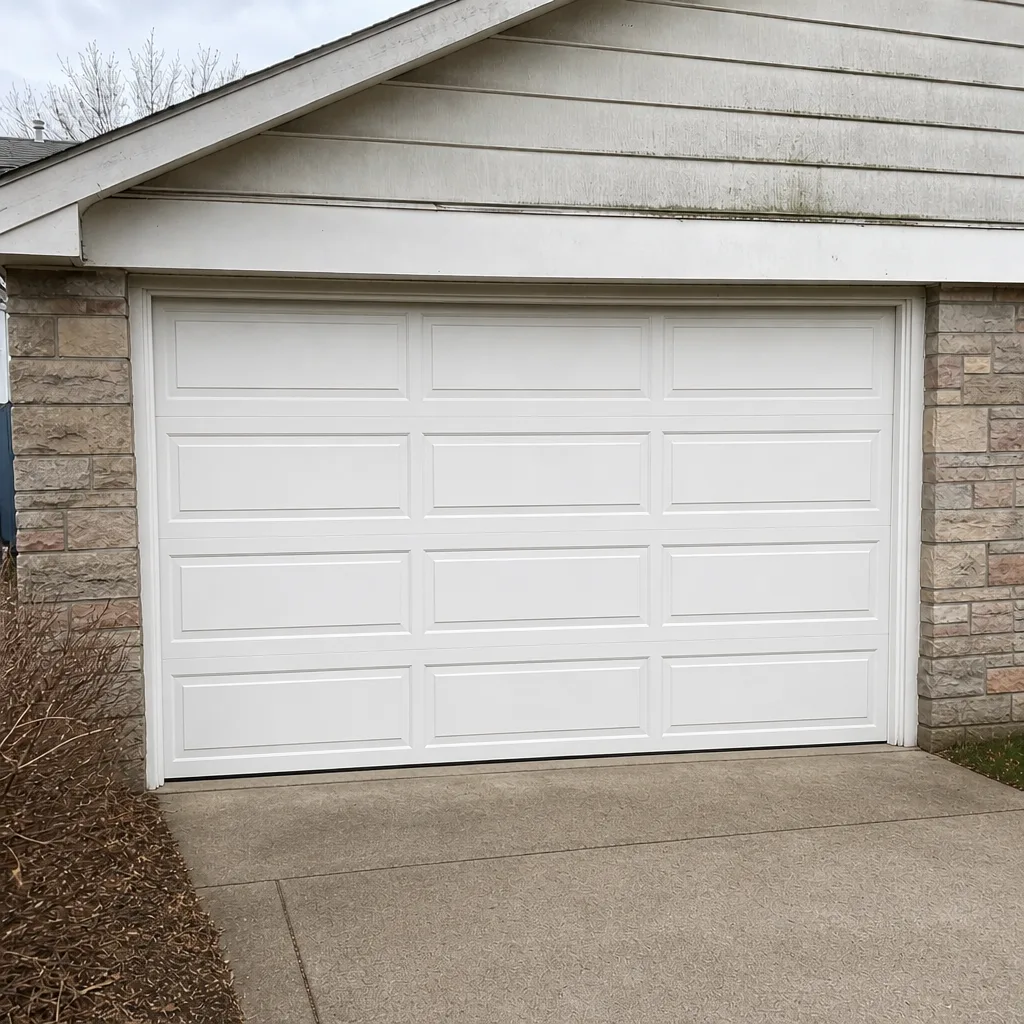 After
When to Call a Professional
Some decisions are best made with a technician in the driveway. If you’re choosing between brands and want an honest read on what fits your existing frame, your opener, and your budget, that’s a conversation worth having before you buy. If a torsion or extension spring has snapped, do not touch it. Springs, cables, and high-tension hardware are the genuinely dangerous part of a garage door, and spring replacement should be done by a trained technician, never as a DIY fix. A door that won’t open or close, an opener that’s dead, or a panel that’s bent or off track are all signs to stop and call. Danbury Garage Door Repair Pros offers free estimates in Danbury, with same-day work where scheduling allows and emergency availability for a failing door. Call Danbury Garage Door Repair Pros at (855) 901-2958. We answer 24/7. Fast dispatch from 7am to 7pm, Sunday through Friday.
Frequently Asked Questions
Clopay and Amarr are the strongest matches for most Danbury homes because their insulated steel lines handle the cold climate and their common parts are available locally. The right brand is really the one whose specs match your door’s daily load and whose parts a local technician can source fast. Wayne Dalton and Craftsman are also good choices when you check parts support for your specific model. Call (855) 901-2958 for a free sizing and brand conversation.
There’s usually a brand label or model tag on the door’s interior panel or frame, and your opener has its own label on the motor housing. A technician can read those tags and tell you the door’s gauge, insulation type, and what opener you have. That’s the first step toward any replacement or repair. Call (855) 901-2958 and we’ll identify what you’re working with.
The brand affects repair speed and parts cost more than the repair itself, because the labor to swap a spring or panel is similar across brands while the parts and availability vary. A local-stocked brand can usually be fixed in a single visit; a proprietary brand may need a part ordered. The written estimate sets the final price before any work starts. Estimates are free at (855) 901-2958.
Expect a limited warranty that separates panels, hardware, and labor, and check whether it covers rust-through versus surface rust and whether environmental corrosion is excluded. Ask if it’s transferable to a future buyer, and confirm labor coverage. A warranty you can read plainly is worth more than a long one full of exclusions. Our team can walk you through what’s covered before you buy.
Yes. We work on LiftMaster, Chamberlain, Genie, Clopay, Amarr, Wayne Dalton, Craftsman, and Raynor, and we install these systems rather than steering you to a brand we happen to prefer. Installation is measured and scheduled rather than same-day, so you’ll get a free measure and a written price first. Call (855) 901-2958 to set up a measure.
No. The written estimate sets the price, and we quote and agree on it before any work starts. If the job turns out to be more involved than expected, that’s a conversation we have before the invoice, not after. Estimates are free. Call (855) 901-2958 for yours. Same-day service and emergency availability are available where scheduling allows.
The Bottom Line
Brand loyalty in garage doors is mostly marketing. What keeps a Danbury door working through cold, wet winters is steel gauge, insulation, a good seal, locally available parts, and a warranty you can actually collect on. Clopay and Amarr hold up well across budgets, Wayne Dalton is durable when parts support allows, and Craftsman openers are easy to service even where door parts are tighter. Match the style to your home, put budget into steel and sealing rather than exotic finishes, and choose the brand your local technician can fix. If you want a straight answer on your door, we service the major systems and can tell you what fits.
Written by the team at Danbury Garage Door Repair Pros.